If you’ve ever received a message that simply says “JS” and paused to wonder what it meant, you’re not alone.
Short text abbreviations like JS are everywhere—used in chats, comments, captions, and replies across social media platforms.
People search for JS meaning in text because the abbreviation can feel confusing, especially since it doesn’t have just one universal meaning.
Depending on the conversation, JS can mean something casual, emotional, technical, or even sarcastic.
In fast-paced digital conversations, people shorten words to save time and keep things informal. JS is one of those abbreviations that looks simple but carries different meanings based on tone, context, and platform.
This article breaks down everything you need to know—what JS means, where it came from, how people use it today, and how to respond naturally when someone sends it to you.
What Does JS Mean in Text & Chat?
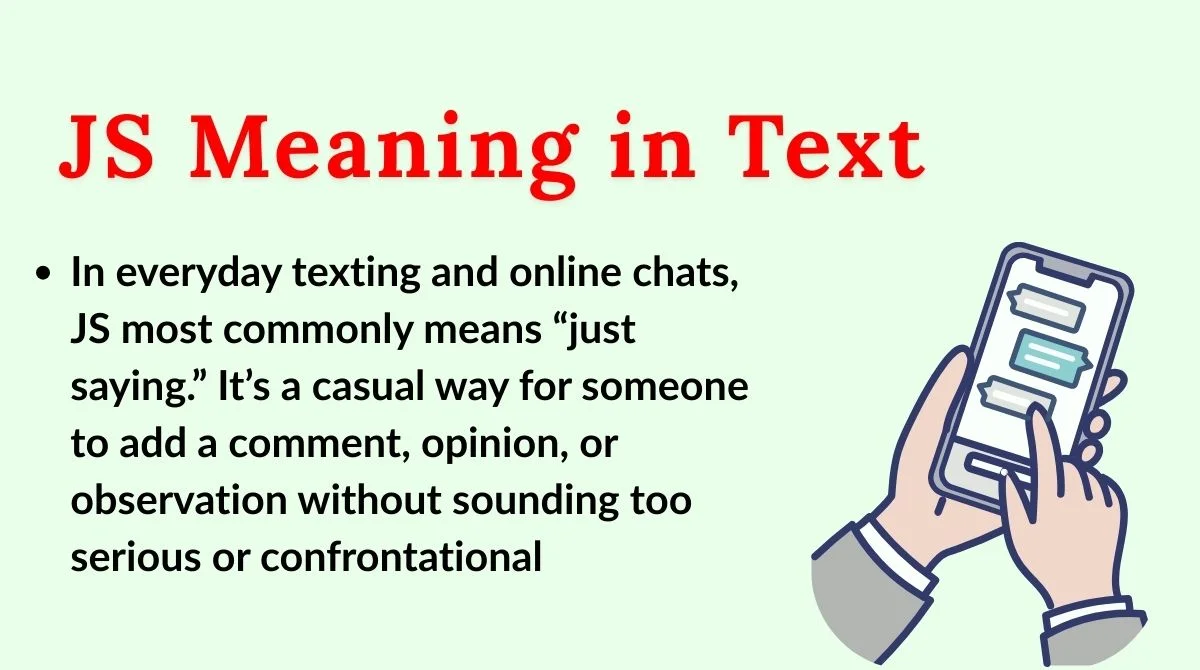
In everyday texting and online chats, JS most commonly means “just saying.” It’s a casual way for someone to add a comment, opinion, or observation without sounding too serious or confrontational. When someone uses JS, they’re often softening their message or making it clear they’re not trying to argue.
For example, if someone says, “That movie was kinda long, JS,” they’re sharing an opinion without pushing it too hard. The abbreviation helps keep the tone light and non-aggressive.
However, JS doesn’t always mean the same thing in every conversation. In some cases, it can also stand for “just saying though,” “just something,” or even be shorthand for JavaScript in technical discussions. That’s why context is everything.
In casual chats, JS often appears at the end of a sentence. It works like a verbal shrug—adding emotional nuance without extra words. People use it to avoid misunderstandings or to show they’re aware their comment might be sensitive.
Key takeaway: when JS appears in a personal chat, it’s usually about tone, not information.
Full Form, Stands For & Short Meaning of JS
The most widely accepted full form of JS in text messaging is “Just Saying.” It doesn’t have an official definition like formal abbreviations do, but its meaning is well understood in digital culture.
Here’s how it breaks down:
- JS = Just Saying
- Short meaning: A casual disclaimer or softener
- Purpose: To express an opinion without sounding pushy
People use JS to:
- Share honest thoughts
- Add sarcasm or humor
- Reduce tension in a message
- Signal that the comment isn’t meant to offend
In informal writing, JS functions almost like punctuation. It doesn’t change the core message, but it changes how the message feels emotionally. Without JS, a sentence might sound blunt. With JS, it feels more relaxed.
Outside of texting, JS can also stand for:
- JavaScript (programming)
- Job Seeker
- Junior Staff
Still, in texting and chat slang, “just saying” is by far the most common and recognizable meaning.
Origin, History & First Known Use of JS
The abbreviation JS emerged naturally alongside early SMS texting and instant messaging. When character limits were strict and typing on numeric keypads was slow, people shortened phrases wherever possible. “Just saying” quickly became “JS.”
Its rise accelerated during the early 2000s with platforms like:
- AOL Instant Messenger
- MSN Messenger
- Early mobile texting
As social media grew, JS became even more popular. Twitter’s original 140-character limit made abbreviations essential, and JS fit perfectly. It allowed users to express opinions quickly while keeping things casual.
Unlike formal acronyms, JS didn’t originate from a specific community or event. It evolved organically through everyday conversation. That’s why it feels so natural and widely understood today.
Over time, the abbreviation crossed platforms and age groups. Teens, adults, and even professionals use JS in informal settings. Its flexibility and tone-softening effect helped it stick around while many other abbreviations faded out.
How People Use JS in Daily Conversations
In daily conversations, JS is mostly used to express honesty without pressure. It signals that the speaker isn’t demanding agreement—they’re simply sharing a thought.
Common use cases include:
- Giving opinions
- Adding light criticism
- Making jokes
- Expressing feelings casually
Examples in real life:
- “I think you deserve better, JS.”
- “That outfit is bold 😂 JS.”
- “You’ve been quiet lately, JS.”
JS often appears at the end of messages, but it can also stand alone as a response. When used alone, it usually refers back to a previous statement.
Tone matters a lot. Depending on context, JS can sound:
- Friendly
- Playful
- Passive-aggressive
- Thoughtful
That’s why reading the full conversation is important before reacting.
JS Meaning Across WhatsApp, Instagram, TikTok & Snapchat
Although JS means “just saying” across most platforms, its tone changes slightly depending on where it’s used.
- WhatsApp: Casual and conversational; often friendly
- Instagram: Used in comments or DMs, sometimes sarcastic
- TikTok: Appears in captions or replies to express opinions
- Snapchat: Very informal, often playful or teasing
On visual platforms like Instagram and TikTok, JS often accompanies emojis or reactions, which help clarify tone. On WhatsApp and Snapchat, it feels more personal and direct.
Regardless of platform, JS remains a low-pressure way to speak honestly without escalating the conversation.
Different Meanings of JS in Other Fields
Outside of texting, JS can mean very different things, which is where confusion sometimes happens.
Common alternative meanings include:
- JavaScript: A popular programming language
- Job Seeker: In career or HR discussions
- Judicial Services: In legal contexts
- Junior Supervisor/Staff: In workplaces
If someone uses JS in a professional or technical setting, it’s almost never slang. That’s why context is critical before assuming the meaning.
Common Confusions, Mistakes & Wrong Interpretations
One common mistake is assuming JS always means JavaScript. In casual chats, that’s rarely the case. Another misunderstanding is reading JS as sarcastic when it’s meant sincerely—or vice versa.
People also confuse JS with similar abbreviations like:
- JK (just kidding)
- TBH (to be honest)
JS doesn’t negate a statement; it softens it. Misreading that nuance can lead to unnecessary tension.
Similar Terms, Alternatives & Related Slang
Related abbreviations include:
- TBH – to be honest
- IMO – in my opinion
- FYI – for your information
- JK – just kidding
Examples of JS in Real Chat Situations
Quick examples:
- “That song hits different 🎧 JS”
- “You’ve been working too hard, JS 💙”
- “I liked the old version better, JS 😅”
These examples show how JS adds tone without changing meaning.
How to Reply When Someone Says JS
You can reply naturally based on tone:
- Agree: “Yeah, I get that.”
- Ask: “What do you mean?”
- Acknowledge: “Fair point.”
- Light reply: “Haha noted 😄”
No need to overthink it—JS usually isn’t confrontational.
Is JS Still Popular? Trends & Online Usage
Yes, JS is still widely used, especially in casual digital conversations. While newer slang comes and goes, JS remains relevant because it’s simple, flexible, and human-sounding. It works across age groups and platforms, which keeps it alive in everyday texting.
FAQs: People Also Ask
1. What does JS mean in texting?
It usually means “just saying.”
2. Is JS rude or sarcastic?
Not inherently—it depends on tone and context.
3. Does JS mean JavaScript in chat?
Only in technical discussions.
4. Can JS be used professionally?
It’s best kept for informal conversations.
5. Is JS outdated slang?
No, it’s still commonly used today.
Conclusion
The meaning of JS in text may look simple, but it plays an important role in modern communication.
Most of the time, it stands for “just saying,” helping people share thoughts casually without sounding harsh or demanding.
Its flexibility across platforms like WhatsApp, Instagram, TikTok, and Snapchat makes it a lasting piece of digital slang.
Understanding JS isn’t just about decoding letters—it’s about reading tone, context, and intent.
Once you get the hang of it, you’ll notice how often it appears and how naturally it fits into conversations.
Whether you’re replying to friends or browsing social media, knowing what JS means helps you communicate more confidently and clearly.

✨ “Elara Winslow weaves words with wit, turning everyday thoughts into moments of joy.”