If you spend time texting, chatting, or scrolling through social media, you may have come across the abbreviation ASL and wondered what it means.
Many people search for the ASL meaning in text because the term can feel confusing, especially when it appears in casual conversations or comments online.
Unlike simple abbreviations such as “LOL” or “BRB,” ASL has a few different meanings depending on context.
In most digital conversations, ASL is not about American Sign Language — it’s actually a quick way to ask personal questions.
Understanding ASL helps you respond correctly, avoid awkward moments, and communicate more confidently online.
In this guide, we’ll explore what ASL means, where it came from, how people use it today, and how you should reply when you see it pop up in your messages.
What Does ASL Mean in Text & Chat?
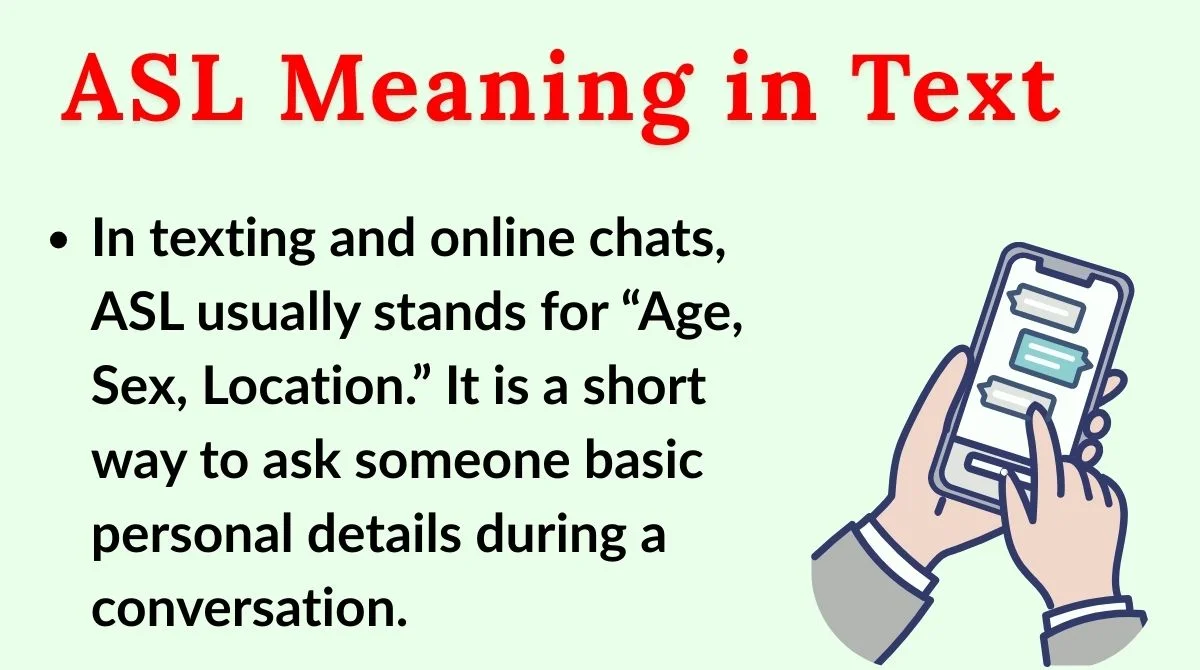
In texting and online chats, ASL usually stands for “Age, Sex, Location.” It is a short way to ask someone basic personal details during a conversation.
People often use ASL when:
- Meeting someone new online
- Chatting in forums or comment sections
- Starting casual or friendly conversations
It’s most commonly used in informal digital spaces like:
- Chat rooms
- Dating apps
- Social platforms
- Gaming chats
Simple Meaning
ASL =
- Age
- Sex
- Location
Instead of asking three questions, people shorten it into one quick message.
Why People Use ASL
People use ASL because it is:
- Fast to type
- Easy to understand
- A casual way to get to know someone
- Common in online culture
However, not everyone likes being asked ASL, especially by strangers. So context and tone matter a lot.
Full Form, Stands For & Short Meaning of ASL
The full form of ASL is “Age, Sex, Location.”
Here is a clear breakdown:
| Letter | Stands For | What It Asks |
|---|---|---|
| A | Age | How old are you? |
| S | Sex | Male, female, or other |
| L | Location | Where are you from? |
Short Meaning
In short, ASL is a way of asking:
“Tell me a little about yourself.”
It is not meant to be formal. It’s more like a quick introduction shortcut used in casual chats.
Important Note
ASL can also mean American Sign Language, but:
- In texting slang, it usually means Age, Sex, Location
- In educational or disability contexts, ASL means American Sign Language
Always look at the context before deciding the meaning.
Origin, History & First Known Use of ASL
ASL as “Age, Sex, Location” became popular in the early days of the internet.
Where It Started
ASL first became widely used in:
- Online chat rooms
- IRC (Internet Relay Chat)
- Early messaging platforms
Back then, people did not have profile pictures or bios. So they asked ASL to quickly know who they were talking to.
Why It Became Popular
It helped users:
- Identify who they were chatting with
- Decide whether to continue a conversation
- Avoid long introductions
How It Spread
From early chat rooms, ASL moved into:
- Instant messengers
- Dating apps
- Social media platforms
Even today, ASL still appears in modern chats, although it’s less common than before.
How People Use ASL in Daily Conversations
Today, ASL is mostly used casually and playfully.
Common Situations
People may use ASL when:
- Talking to someone new online
- Commenting on a story or post
- Starting a friendly conversation
- Flirting lightly
Typical Usage
Instead of writing:
“How old are you, what gender are you, and where are you from?”
They simply write:
ASL?
Tone Matters
ASL can feel:
- Friendly if asked politely
- Intrusive if asked too quickly
- Uncomfortable if asked aggressively
So timing and respect are important when using ASL.
ASL Meaning Across WhatsApp, Instagram, TikTok & Snapchat
The meaning of ASL stays mostly the same across platforms, but how it’s used can vary.
On WhatsApp, ASL is often used in:
- Private chats
- Group chats with new members
Example:
- “Hey, ASL? 😊”
On Instagram, ASL may appear in:
- DMs
- Story replies
- Comments
Example:
- “Nice pic! ASL?”
TikTok
On TikTok, ASL is more playful or curious:
- In comments
- During live streams
Example:
- “ASL in the chat!”
Snapchat
Snapchat users may use ASL when:
- Adding new friends
- Starting streaks
Example:
- “ASL so we know each other 😄”
Different Meanings of ASL in Other Fields
ASL does not always mean Age, Sex, Location.
Other Common Meanings
ASL can also stand for:
- American Sign Language – A language used by the deaf community
- Advanced Squad Leader – A board game
- Average Sea Level – In geography and science
- Above Sea Level – Measurement term
Why Context Matters
If someone says:
- “I’m learning ASL” → They likely mean American Sign Language
- “ASL?” in a chat → They likely mean Age, Sex, Location
Always look at how the word is used.
Common Confusions, Mistakes & Wrong Interpretations
ASL is often misunderstood.
Common Mistakes
- Thinking ASL always means American Sign Language
- Assuming someone is being rude when they ask ASL
- Using ASL in professional or formal chats
What ASL Is NOT
- It is not always about disabilities
- It is not a formal introduction
- It is not suitable for business chats
Understanding the setting helps avoid awkward moments.
Similar Terms, Alternatives & Related Slang
If ASL feels too direct, people use softer alternatives.
Popular Alternatives
- “Tell me about yourself”
- “Where are you from?”
- “How old are you?”
- “M/F?” (male/female)
- “Stats?”
Related Slang
You might also like:
- BRB – Be Right Back
- DM – Direct Message
- IMO – In My Opinion
- ICYMI – In Case You Missed It
Examples of ASL in Real Chat Situations
Here are quick, natural examples:
- “Hey! ASL? 😊”
- “ASL before we continue?”
- “Someone new here — ASL!”
- “ASL pls 😄”
- “Cool! What’s your ASL?”
These show how casually ASL fits into chats.
How to Reply When Someone Says ASL
If someone asks you ASL, you have options.
If You’re Comfortable
You can reply like:
- “23, F, New York”
- “19/M/UK 🇬🇧”
- “25, non-binary, Canada”
If You’re Not Comfortable
You can reply politely:
- “I prefer not to share personal info.”
- “Let’s just chat first 😊”
- “I don’t usually give that out.”
You are always allowed to protect your privacy.
Is ASL Still Popular? Trends & Online Usage
ASL is less popular than before, but it still exists.
Current Trends
ASL is now:
- Used more in casual chats
- Less common in professional spaces
- Often replaced by profile bios
Why It’s Fading
Because today:
- Profiles already show age and location
- People are more privacy-aware
- Conversations are more context-based
Still, ASL remains a recognizable part of internet culture.
FAQs About ASL Meaning in Text
1. Does ASL always mean Age, Sex, Location?
No. In text slang, yes, but in other contexts it can mean American Sign Language or other things.
2. Is it rude to ask ASL?
It can be if asked too early or aggressively. Politeness matters.
3. Should I reply to ASL from strangers?
Only if you feel comfortable. Privacy always comes first.
4. Is ASL used on dating apps?
Yes, sometimes, but many prefer more natural questions now.
5. Is ASL outdated?
It’s less popular than before, but still used casually online.
Conclusion
Understanding the ASL meaning in text helps you navigate online conversations with more confidence and clarity.
While ASL mainly stands for “Age, Sex, Location” in chats, it can also mean other things depending on context, such as American Sign Language or technical terms.
Knowing when and how ASL is used allows you to respond comfortably, avoid misunderstandings, and protect your privacy when needed.
Although ASL is not as popular as it once was, it remains a recognizable part of internet culture and digital slang.
Whether you choose to answer it or not, being informed gives you control over your online interactions — and that’s what smart communication is all about.

✨ “Elara Winslow weaves words with wit, turning everyday thoughts into moments of joy.”