If you’ve ever seen someone comment “SFS?” under a post or send it in a quick message, you’re not alone in wondering what it means.
The phrase SFS meaning in text is searched often because the abbreviation shows up across social media, chats, and casual conversations—especially on visual platforms.
Slang moves fast online, and acronyms like SFS can feel confusing if you’re not active in those spaces.
SFS is short, catchy, and flexible, which is exactly why people use it. But its meaning can change depending on context, platform, and tone.
That’s where misunderstandings happen. This article breaks everything down in simple language.
You’ll learn what SFS means, where it came from, how people actually use it, and how to reply without feeling awkward. Whether you’re texting, scrolling Instagram, or posting on TikTok, this guide has you covered.
What Does SFS Mean in Text & Chat?
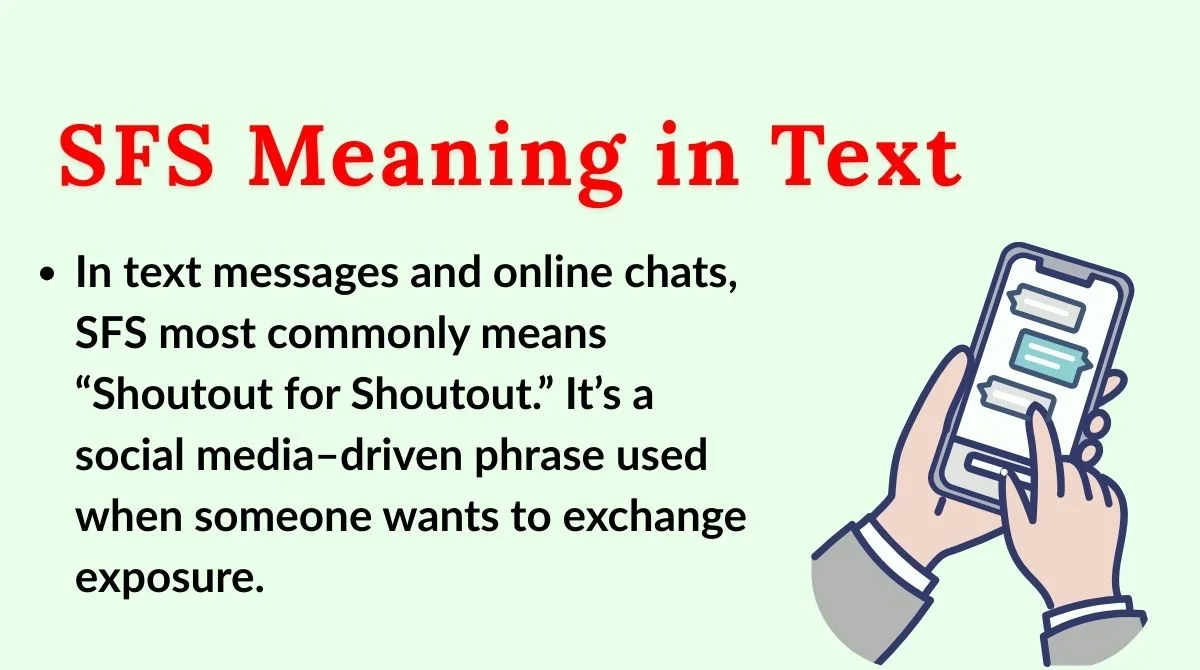
In text messages and online chats, SFS most commonly means “Shoutout for Shoutout.” It’s a social media–driven phrase used when someone wants to exchange exposure.
One person promotes another account, and the favor is returned. Simple deal, mutual benefit.
In everyday texting, SFS is usually informal and friendly. It’s often sent as a quick request rather than a full sentence. For example, someone might comment “SFS?” on a post or DM it to another user. The question mark matters—it signals a request, not a demand.
However, context is everything. While “Shoutout for Shoutout” is the dominant meaning, SFS can also stand for other phrases depending on the situation. Without context, the message can feel confusing, especially to people who don’t use social media heavily.
What makes SFS unique is that it’s less about conversation and more about visibility. It’s not emotional or expressive like “LOL” or “BRB.” Instead, it’s transactional. People use it to grow followers, boost reach, or support friends’ accounts.
Because it’s short and efficient, SFS fits perfectly into fast-moving chats. No long explanation needed. If both people know the term, one word says it all.
Full Form, Stands For & Short Meaning of SFS
The most accepted full form of SFS is “Shoutout for Shoutout.” Broken down simply:
- Shoutout: Publicly promoting someone else
- For: In exchange
- Shoutout: Receiving promotion back
So the short meaning is: “I’ll promote you if you promote me.”
In texting and comments, people don’t usually spell this out. The abbreviation saves time and space, which is why it caught on quickly. On platforms where character limits or attention spans are short, SFS makes sense.
That said, SFS can have alternative meanings in other contexts, such as:
- Snap for Snap
- Spam for Spam
- Sorry for Spam
These are less common but still used, especially on Snapchat. This is why it’s important to look at where and how the term appears. A comment under a photo usually means shoutouts. A message after many snaps might mean sorry for spam.
In short, SFS is a flexible acronym. The full form changes slightly, but the idea stays the same: quick communication without extra words.
Origin, History & First Known Use of SFS
SFS originated with the rise of early social media platforms, especially Instagram in the early 2010s. As users started focusing more on followers and engagement, they looked for easy ways to grow accounts organically. Shoutouts became one of the simplest strategies.
Instead of writing long messages like “I’ll promote your account if you promote mine,” users shortened it to SFS. The term spread fast through comments, captions, and direct messages. Influencers, small creators, and even regular users adopted it.
Snapchat later added fuel to its popularity. On Snapchat, people already exchanged snaps frequently, so variations like “Snap for Snap” fit naturally. The same acronym worked, even though the meaning shifted slightly.
What’s interesting is that SFS wasn’t created by a brand or community—it evolved naturally. No official launch. No rules. Just people copying what worked. That’s typical of internet slang.
Over time, SFS became a recognized digital term. Even users who don’t participate in shoutouts still recognize it. That’s how you know a slang term has fully entered online culture.
How People Use SFS in Daily Conversations
In daily conversations, SFS is rarely used in spoken language. You won’t hear someone say it out loud often. It lives almost entirely in text-based communication.
People use SFS in:
- DMs
- Comments
- Story replies
- Group chats about social media
It’s usually casual and low-pressure. Someone might drop “SFS?” and wait for a yes or no. If the other person agrees, they both post shoutouts and move on.
Tone matters. Adding emojis or punctuation can soften the request:
- “SFS? 😊”
- “Anyone down for SFS?”
- “SFS later?”
SFS is also time-sensitive. It’s often tied to recent posts or stories. That’s why people use it quickly rather than explaining it.
In short, SFS is functional. It’s not about personality—it’s about action. And that’s why it stays short.
SFS Meaning Across WhatsApp, Instagram, TikTok & Snapchat
The meaning of SFS shifts slightly by platform:
Instagram
Here, SFS almost always means Shoutout for Shoutout. It’s used in comments, stories, and DMs to trade exposure.
Snapchat
On Snapchat, SFS can mean:
- Snap for Snap
- Shoutout for Shoutout
- Sorry for Spam
Context is key. A message after many snaps usually means apology.
TikTok
On TikTok, SFS is less common but still used among creators. It usually refers to cross-promotion through stories or comments.
WhatsApp
On WhatsApp, SFS is rare. If used, it’s typically between friends who already understand the term.
So while the letters stay the same, the platform often tells you the meaning.
Different Meanings of SFS in Other Fields
Outside of texting and social media, SFS can stand for very different things. For example:
- Secure File System (technology)
- San Francisco Symphony (music)
- Student Financial Services (education)
- Small Fiber Sensory Neuropathy (medical)
These meanings are usually formal and professional. You won’t confuse them with slang unless you mix contexts.
That’s why “SFS meaning in text” is such a common search. People want the casual meaning, not the technical one.
Common Confusions, Mistakes & Wrong Interpretations
The biggest mistake is assuming SFS always means the same thing. It doesn’t.
Common misunderstandings include:
- Thinking SFS is flirting (it’s not)
- Replying “thanks” when action is expected
- Confusing shoutouts with apologies
Another mistake is agreeing to SFS and not following through. That can hurt trust, especially among creators.
If you’re unsure, it’s okay to ask:
- “Do you mean shoutout for shoutout?”
Clarity saves awkward moments.
Similar Terms, Alternatives & Related Slang
Related slang includes:
- L4L – Like for Like
- F4F – Follow for Follow
- C4C – Comment for Comment
- SO – Shoutout
These terms all serve the same goal: engagement and growth.
Examples of SFS in Real Chat Situations
Quick examples you might see:
- “SFS? I love your page 😊”
- “Anyone wanna do SFS today?”
- “SFS later, I’m posting soon”
- “SFS 🔥?”
These are short, friendly, and straight to the point.
How to Reply When Someone Says SFS
Your reply depends on interest:
If yes:
- “Sure, let’s do it 👍”
- “Yeah! Tag me”
If no:
- “Not right now, thanks!”
- “I’m good, but appreciate it”
If confused:
- “Do you mean shoutout for shoutout?”
Simple replies work best.
Is SFS Still Popular? Trends & Online Usage
SFS is still used, but less than before. Algorithms now favor original content over shoutouts. That said, smaller creators still rely on it.
It’s most popular in niche communities and personal accounts. While trends change, SFS hasn’t disappeared—it’s just more selective now.
FAQs: People Also Ask
1. What does SFS mean in texting?
It usually means Shoutout for Shoutout.
2. Is SFS the same on all apps?
No. The meaning can change by platform.
3. Is SFS safe to do?
Yes, but only with trusted accounts.
4. Can SFS mean “sorry for spam”?
Yes, especially on Snapchat.
5. Is SFS still effective for growth?
It can help, but quality content matters more.
Conclusion
Understanding the SFS meaning in text makes online communication easier and less awkward.
While it may look like just three letters, SFS carries a clear intention—connection through mutual promotion.
Its meaning depends on context, platform, and timing, which is why confusion happens so often.
The key takeaway is simple: don’t guess. Look at where it’s used and how it’s written. Whether you’re a creator, a casual user, or someone trying to keep up with internet slang, knowing what SFS means helps you respond confidently.
Slang will always evolve, but once you understand the logic behind terms like SFS, learning new ones becomes much easier.

✨ “Elara Winslow weaves words with wit, turning everyday thoughts into moments of joy.”