If you’ve ever received a short message starting with “FYI” and paused to think, “What exactly does that mean?”, you’re not alone.
The FYI meaning in text is one of the most searched slang and abbreviation queries online today.
People see it in chats, emails, comments, and captions—but its tone and intent can feel unclear. Is it helpful? Passive-aggressive? Just informative?
In simple terms, FYI is a quick way to share information without demanding action. It saves time and keeps conversations efficient.
That’s why it shows up everywhere—from WhatsApp messages to workplace emails and TikTok comments.
This guide breaks down what FYI means, where it comes from, how people actually use it today, and how you should respond when someone sends it to you.
Let’s make it crystal clear.
What Does FYI Mean in Text & Chat?
The FYI meaning in text is straightforward: it signals that the sender is sharing information for awareness only. It does not usually require a reply or action.
In texting and chat apps, FYI acts like a verbal heads-up. It tells the reader, “I’m letting you know this in case it’s useful.” The tone can be neutral, friendly, or slightly formal, depending on context.
Key things FYI usually implies:
- The information may matter later
- No urgent response is expected
- The sender is being informative, not demanding
In casual chats, FYI often replaces longer explanations. Instead of saying, “I just wanted to let you know,” people shorten it to FYI to save time.
However, tone matters. In some situations—especially work chats—FYI can feel cold or blunt if not paired with context. That’s why people often soften it with emojis or extra words.
Quick examples:
- “FYI, the meeting starts at 10, not 9.”
- “FYI 😊 I already sent the documents.”
- “FYI—this link expires tonight.”
Understanding intent is key. Most of the time, FYI is simply informational, not emotional.
Full Form, Stands For & Short Meaning of FYI
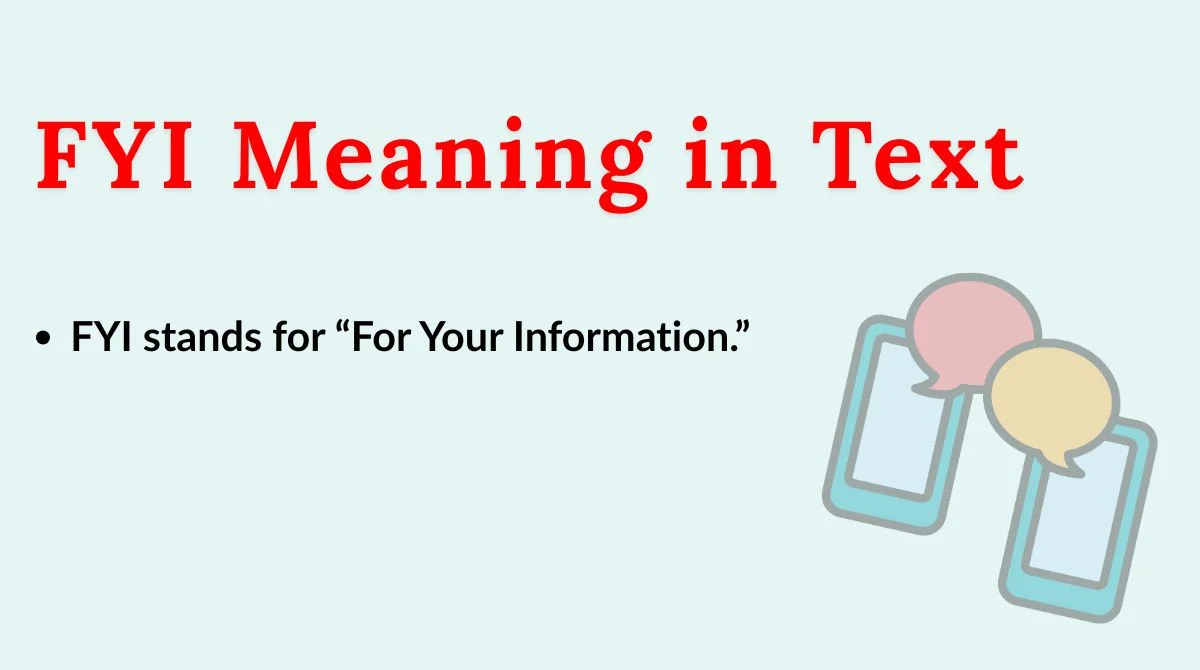
FYI stands for “For Your Information.”
That’s it—no hidden meaning, no secret slang origin. The abbreviation is a shortened form of a complete phrase that’s been used in formal writing for decades.
Short meaning of FYI:
“Here’s some information you should know.”
It’s often used:
- At the beginning of a sentence
- To introduce facts, updates, or reminders
- To avoid sounding pushy or commanding
FYI is flexible. It works in both professional and casual settings, which is rare for internet abbreviations. That flexibility is why it has survived while other slang faded.
Common variations include:
- FYI:
- FYI –
- FYI 😊
- Just FYI…
The meaning stays the same. Only the tone changes.
If you’re exploring similar abbreviations, you could internally link to related terms like:
- BRB Meaning in Text
- ASAP Meaning in Chat
- IMO Meaning Online
Origin, History & First Known Use of FYI
The FYI meaning in text didn’t start with texting at all. FYI existed long before smartphones.
The phrase “For Your Information” dates back to at least the early 20th century. It was commonly used in memos, letters, and official documents. Office workers and military communications used it to pass along non-urgent updates.
FYI as an abbreviation became popular:
- In internal office memos
- In early email communication (1980s–1990s)
- On message boards and forums
When texting and instant messaging exploded, FYI naturally followed. It was short, clear, and already familiar.
Unlike newer slang, FYI didn’t change its meaning much over time. It simply moved platforms—from paper to screens.
That’s why FYI feels “normal” even today. It bridges old-school professionalism and modern digital talk.
How People Use FYI in Daily Conversations
In everyday conversations, FYI works as a soft information marker. People use it to update others without pressure.
You’ll often see FYI used:
- Before reminders
- When correcting small details
- When sharing background info
Examples in daily life:
- “FYI, the store closes early today.”
- “FYI, he already knows about it.”
- “FYI, traffic is shocking right now 🚗”
FYI can appear:
- At the start of a message
- In the middle of a sentence
- As a stand-alone comment
Tone depends on delivery. Adding emojis or polite words makes it friendly. Using FYI alone can feel blunt.
That’s why many people add:
- “Just FYI”
- “FYI in case you missed it”
- “FYI 😊”
Used well, FYI keeps conversations efficient and respectful.
FYI Meaning Across WhatsApp, Instagram, TikTok & Snapchat
The FYI meaning in text stays consistent across platforms, but usage style changes.
- Common in group chats
- Used for updates and reminders
Example: - “FYI, the plan changed to Friday 👍”
- Used in DMs or comments
- Often paired with tone-softening emojis
Example: - “FYI 😊 this post is sponsored.”
TikTok
- Seen in comments
- Used to clarify or correct information
Example: - “FYI, this trend started in 2022.”
Snapchat
- More casual
- Often part of quick updates
Example: - “FYI I’m running late 😅”
Across all platforms, FYI means the same thing—but emojis and context make a big difference.
Different Meanings of FYI in Other Fields
While the FYI meaning in text is universal, some fields use it slightly differently.
Workplace & Business
- FYI signals “no action needed”
- Often used in emails and Slack messages
Education
- Teachers use FYI for announcements
- Students use it for group work updates
Media & Journalism
- FYI introduces background context
- Used in editorial notes
Legal & Formal Writing
- FYI may appear in internal notes
- Rarely used in final documents
Despite these settings, the core meaning stays informational.
Common Confusions, Mistakes & Wrong Interpretations
The biggest mistake people make with FYI is assuming tone.
Common misunderstandings:
- Thinking FYI is passive-aggressive
- Assuming it demands action
- Reading it as rude or dismissive
FYI alone is neutral. Problems happen when:
- There’s no context
- The relationship is tense
- The message is already negative
Wrong usage example:
- “FYI, this is your fault.” ❌
Better usage:
- “FYI, I noticed this issue earlier.”
Context matters more than the word itself.
Similar Terms, Alternatives & Related Slang
If FYI feels too formal or blunt, alternatives include:
- Just so you know
- Heads up
- Quick note
- For reference
- BTW (By the way)
Related abbreviations:
- ASAP
- IMO
- TBH
- ICYMI
(Internal link idea: ICYMI Meaning in Text)
Each alternative changes tone slightly but keeps the message light.
Examples of FYI in Real Chat Situations
Quick, real-life examples:
- “FYI 😊 I already booked the tickets.”
- “FYI—this link stops working tonight.”
- “Just FYI, I won’t be online later.”
- “FYI 👀 he’s already in the group.”
These short messages show how flexible FYI is.
How to Reply When Someone Says FYI
Most FYI messages don’t require a reply. But if you do respond, keep it simple.
Polite replies:
- “Got it, thanks!”
- “Noted 👍”
- “Thanks for the heads up!”
If clarification is needed:
- “Thanks—can you explain a bit more?”
Matching tone is the safest approach.
Is FYI Still Popular? Trends & Online Usage
Yes—FYI is still very popular.
Why it hasn’t faded:
- It’s short and efficient
- It works in professional and casual settings
- It doesn’t feel trendy or outdated
Search trends show steady interest, especially among:
- Students
- Remote workers
- Social media users
FYI has become digital language “infrastructure.” It’s not flashy—but it’s not going anywhere.
FAQs About FYI Meaning in Text
1. Is FYI rude in texting?
No. It’s neutral. Tone depends on context.
2. Does FYI mean action is required?
Usually no. It’s informational.
3. Can FYI be used casually?
Yes, very commonly.
4. Should I reply to FYI messages?
Only if needed or polite.
5. Is FYI outdated slang?
No. It’s still widely used.
Conclusion
Understanding the FYI meaning in text helps you communicate more clearly and avoid unnecessary misunderstandings.
FYI is a simple, efficient way to share information without pressure. It works across platforms, generations, and situations because its meaning is stable and familiar.
Whether you’re texting friends, replying to a coworker, or commenting on social media, FYI helps keep messages short and informative.
The key is context—pair it with clarity, emojis, or extra words when needed.
Used correctly, FYI isn’t cold or rude. It’s practical, respectful, and timeless. Once you understand it, you’ll spot it everywhere—and probably start using it more yourself.

✨ “Elara Winslow weaves words with wit, turning everyday thoughts into moments of joy.”