If you’ve ever seen someone text “FML” after a bad day, awkward moment, or total mishap, you’re not alone.
The phrase pops up constantly in texts, memes, and social media posts, leaving many people wondering about the exact FML meaning in text.
People search for it because it’s short, emotional, and often used in dramatic or humorous situations—but not everyone is sure what it actually stands for or how strong it is.
Understanding slang like FML helps you read the tone behind messages and avoid misinterpretation.
Sometimes it’s serious, sometimes sarcastic, and sometimes just dark humor. In this guide, we’ll break down what FML means, where it came from, how it’s used across platforms like WhatsApp and TikTok, and how you should respond when someone sends it.
Let’s decode it—no confusion, no awkward replies.
What Does FML Mean in Text & Chat?
The FML meaning in text is straightforward but emotionally loaded. FML stands for an expression of frustration, embarrassment, or disappointment. When someone types FML in a chat, they’re usually reacting to a situation that feels unfair, annoying, or downright miserable in the moment.
In texting and online chats, FML is rarely meant literally. Instead, it’s an exaggerated way of saying, “This situation really sucks right now.” People use it after minor inconveniences (like spilling coffee) just as often as bigger problems (like missing an important deadline).
What makes FML unique is its flexibility. It can be:
- Serious: expressing genuine stress or sadness
- Sarcastic: reacting dramatically to something small
- Humorous: poking fun at bad luck
Tone depends heavily on context. A single “FML.” after a long story usually signals real frustration, while “lol FML 😂” suggests playful self-mockery.
In chats, FML often replaces longer explanations. Instead of venting for five minutes, people drop three letters and trust that the emotion comes through. That’s why it remains popular—short, expressive, and instantly understood by most internet users.
Full Form, Stands For & Short Meaning of FML
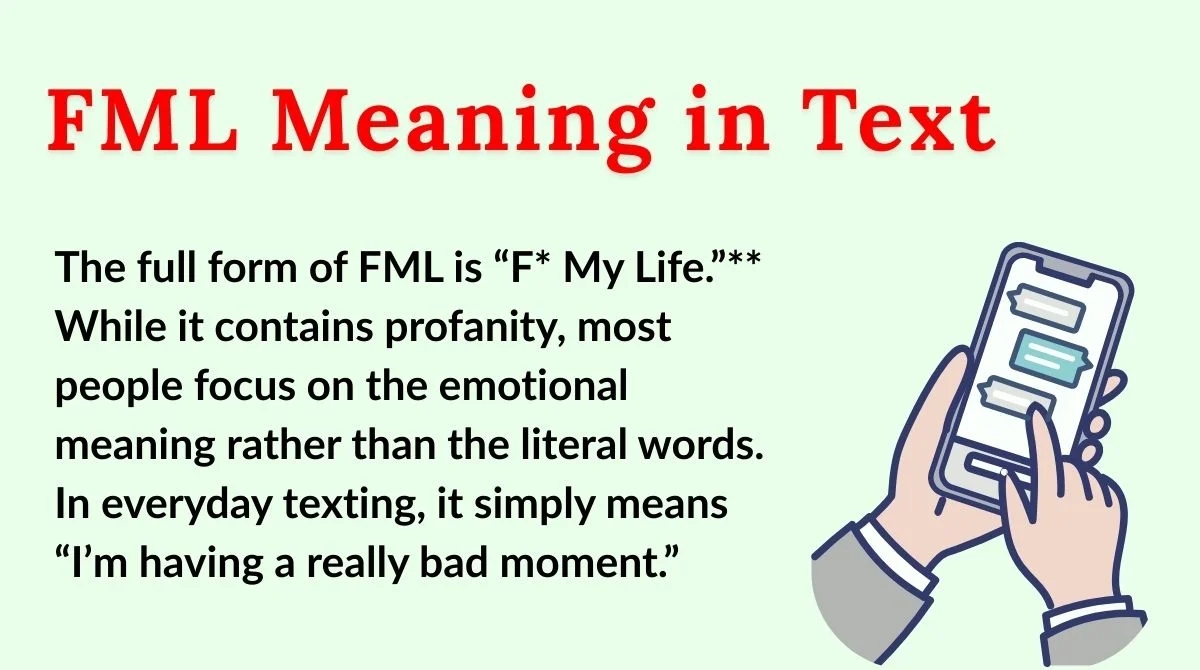
The full form of FML is “F* My Life.”** While it contains profanity, most people focus on the emotional meaning rather than the literal words. In everyday texting, it simply means “I’m having a really bad moment.”
Short meaning of FML:
- “This is going terribly.”
- “I can’t believe this happened.”
- “My luck is awful right now.”
Despite the strong language, FML is often used casually. Many users don’t even register it as a swear phrase anymore—it’s become normalized internet slang. That said, it’s still informal and best avoided in professional or academic communication.
Some people also soften it mentally to avoid the profanity, treating it as an emotional abbreviation rather than a literal statement. This explains why FML appears so often in memes, captions, and jokes without sounding overly aggressive.
If you’re explaining it to someone new to internet slang, the easiest way is:
“FML is what people say when something goes wrong and they’re frustrated or joking about their bad luck.”
Origin, History & First Known Use of FML
The origin of FML traces back to early internet culture in the late 1990s and early 2000s. As online chat rooms, forums, and instant messaging grew, people began shortening emotional phrases into acronyms. FML emerged as one of those raw, expressive shortcuts.
Its popularity exploded in the mid-2000s with the launch of the website “FMyLife,” where users shared short stories about embarrassing or unlucky experiences. The site helped cement FML as a cultural phrase rather than just a random abbreviation.
Before social media, FML was mostly used in:
- Online forums
- IRC chats
- Early texting culture
As platforms like Twitter, Instagram, and later TikTok took off, FML evolved into a meme-friendly expression. It no longer required a long story—just a caption, screenshot, or reaction was enough.
Over time, the phrase softened. What once sounded harsh became humorous and relatable. Today, FML is more about shared human frustration than actual despair.
Its longevity comes from that relatability—everyone has moments where “FML” feels like the perfect reaction.
How People Use FML in Daily Conversations
In daily conversations, FML is used as a quick emotional reaction rather than a detailed explanation. People drop it into texts, group chats, and comments when something goes wrong and they want instant sympathy or laughs.
Common everyday uses include:
- Reacting to bad luck
- Expressing embarrassment
- Complaining without overexplaining
You’ll often see it paired with humor or emojis to lighten the tone. In spoken language, people might even say “FML” out loud instead of the full phrase.
Typical usage patterns:
- At the end of a message for emphasis
- As a standalone reply
- Paired with “lol” to signal joking
Example:
- “Missed my train by 30 seconds. FML 😩”
- “I studied the wrong chapter. lol FML”
In close friendships, FML can be a bonding tool—shared frustration creates connection. However, context matters. If someone uses it repeatedly or without humor, it may signal real stress, and a supportive response is better than a joke.
FML Meaning Across WhatsApp, Instagram, TikTok & Snapchat
The FML meaning in text stays consistent across platforms, but how it’s presented changes.
WhatsApp:
Often used in private chats or groups to vent quickly.
- “Boss called me on my day off. FML.”
Instagram:
Used in captions, memes, or story text—usually sarcastic or funny.
- A photo of burnt food: “Tried cooking. FML 😂”
TikTok:
Appears in video captions or comments reacting to relatable fails.
- “When your alarm doesn’t go off… FML.”
Snapchat:
Short, reactive, and casual—often overlaid on photos.
- A selfie with messy hair: “FML.”
Each platform leans toward humor and relatability, especially TikTok and Instagram. On messaging apps like WhatsApp, it can feel more personal and emotional.
Different Meanings of FML in Other Fields
While rare, FML can mean different things outside texting slang. These meanings are usually technical or niche and depend heavily on context.
Possible alternative meanings:
- Fantasy Media League (gaming or sports contexts)
- File Markup Language (technical discussions)
- Functional Movement Lab (fitness or rehab fields)
However, in casual digital communication, over 99% of the time, FML refers to “F*** My Life.” If you see it in a professional or academic context, look at surrounding terms to avoid misunderstanding.
Common Confusions, Mistakes & Wrong Interpretations
One common mistake is taking FML too literally. Most people aren’t expressing real hopelessness—they’re reacting emotionally in the moment.
Other misunderstandings include:
- Assuming it’s always serious
- Using it in formal settings
- Replying with jokes when someone is genuinely upset
Another confusion is mixing FML with similar acronyms like:
- SMH (shaking my head)
- IDK (I don’t know)
They express different emotions, so context matters. When in doubt, respond with empathy rather than humor.
Similar Terms, Alternatives & Related Slang
If you want alternatives to FML, here are popular options:
- SMH – disappointment
- Ugh – mild frustration
- Why me 😭 – dramatic humor
- This ain’t it – dissatisfaction
- I’m done – exaggerated frustration
Examples of FML in Real Chat Situations
Quick, realistic examples:
- “Dropped my phone and cracked the screen. FML 😭”
- “Sent the email to the wrong person. FML.”
- “Ran out of coffee on Monday morning. FML ☕”
These examples show how flexible and expressive the phrase is.
How to Reply When Someone Says FML
Your reply depends on tone.
If it’s joking:
- “😂 That’s rough.”
- “Bad luck strikes again.”
If it’s serious:
- “That sounds stressful. Want to talk?”
- “I’m sorry—that really sucks.”
Matching their emotional level is key. When unsure, choose kindness over humor.
Is FML Still Popular? Trends & Online Usage
Yes, FML is still widely used, though it’s more casual now. While newer slang appears constantly, FML remains relevant because it’s simple and relatable.
Trends show:
- Continued use in memes
- Strong presence on TikTok and Instagram
- Slight decline in younger Gen-Z slang, but still understood
It’s no longer edgy—it’s familiar.
FAQs: What People Also Ask
1. Is FML a bad word?
It includes profanity, but it’s commonly used casually online.
2. Can FML be used jokingly?
Yes, very often—especially with emojis or “lol.”
3. Is FML appropriate for work chats?
Generally no. It’s best kept informal.
4. Does FML mean someone is depressed?
Not necessarily. Context matters a lot.
5. Is FML still used in 2025?
Yes, especially in memes and casual texting.
Conclusion
Understanding the FML meaning in text helps you navigate modern conversations with more confidence and empathy.
While it literally stands for a strong phrase, its real purpose today is emotional expression—frustration, humor, embarrassment, or all three at once.
From private WhatsApp chats to viral TikTok captions, FML has evolved into a shorthand for life’s small (and big) annoyances.
Knowing when it’s used jokingly versus seriously can help you respond appropriately and avoid awkward moments.
Even as new slang terms come and go, FML remains relatable because bad days never go out of style. Used thoughtfully, it’s just another way people share their human moments online—messy, funny, and real.

✨ “Elara Winslow weaves words with wit, turning everyday thoughts into moments of joy.”