Last updated on April 1st, 2026 at 06:55 am
If you’ve ever seen someone reply “TMI” in a text, comment, or chat and wondered what just happened, you’re not alone.
The phrase pops up constantly in casual conversations, social media comments, and group chats.
People search for TMI meaning in text because the abbreviation can feel blunt, awkward, or even rude if you don’t fully understand it.
At its core, TMI is about boundaries—specifically, when someone shares more personal information than others expected or wanted. While it’s often used jokingly, it can also signal discomfort.
Understanding what TMI means, where it came from, and how it’s used today helps you read conversations more accurately and respond without embarrassment.
Let’s break it down clearly, simply, and with real-world examples.
What Does TMI Mean in Text & Chat?
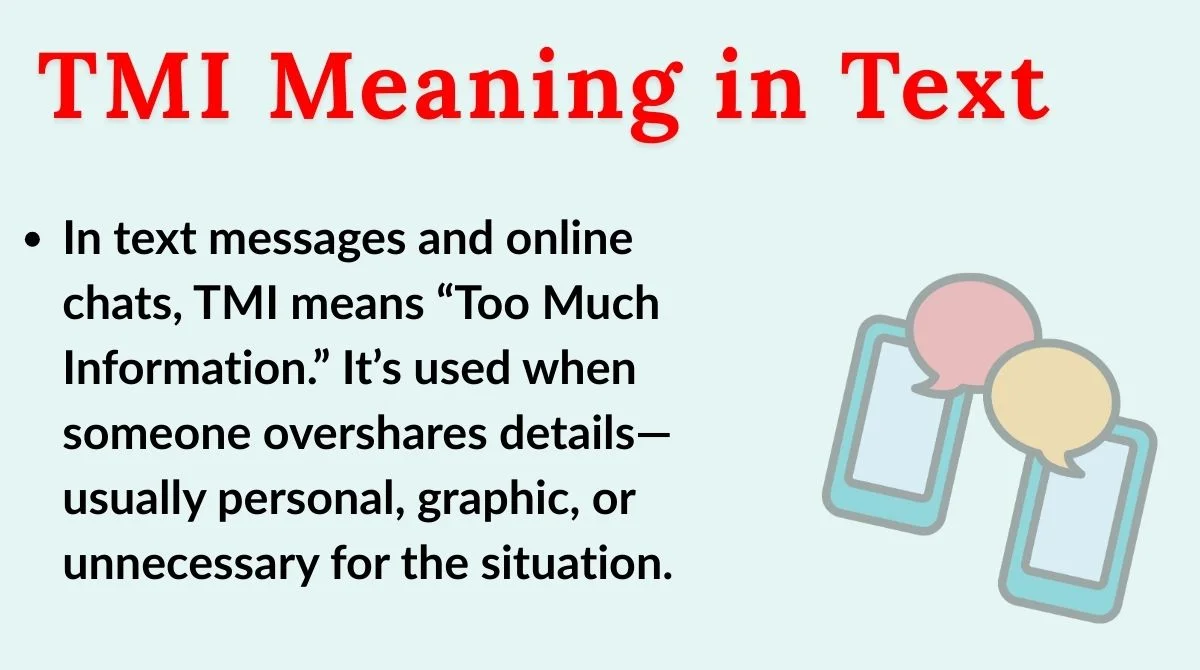
In text messages and online chats, TMI means “Too Much Information.” It’s used when someone overshares details—usually personal, graphic, or unnecessary for the situation.
TMI isn’t always mean-spirited. In many cases, it’s playful or sarcastic, especially among friends. Other times, it’s a polite way of saying, “Okay, I didn’t need to know that.”
People use TMI to:
- React to awkward personal details
- Lightly tease someone for oversharing
- Signal discomfort without starting conflict
Tone matters a lot. A laughing emoji can make TMI feel friendly, while a dry “TMI.” can sound harsh.
Quick examples:
- “I didn’t need to know that 😭 TMI”
- “LOL okay, that’s TMI”
- “Bro… TMI 💀”
Full Form, Stands For & Short Meaning of TMI
TMI stands for Too Much Information.
Short meaning:
You shared more details than necessary or appropriate.
It’s commonly used in:
- Text messages
- Social media comments
- Online forums
- Casual spoken conversations
Unlike many slang terms, TMI has stayed consistent in meaning over time. It doesn’t change much by age group or platform, which makes it easy to recognize once you know it.
Origin, History & First Known Use of TMI
The phrase “too much information” existed long before texting, but the abbreviation TMI gained popularity in the late 1990s and early 2000s with the rise of internet chat rooms and early forums.
As online conversations became faster and more casual, people needed quick ways to react. TMI fit perfectly—it was short, expressive, and slightly humorous. By the time texting and social media exploded, TMI was already part of digital slang culture.
Today, it’s considered a classic internet abbreviation, similar to LOL or BRB.
TMI Meaning in Kpop
In K-pop culture, the term TMI stands for “Too Much Information”. However, unlike its usual meaning in English where it refers to sharing unnecessary or overly personal details, in K-pop it has a slightly different and more positive vibe. Idols often use TMI to share small, random, or fun facts about their day that fans might not really need to know but still enjoy hearing. For example, a K-pop artist might say their TMI is what they ate for breakfast or what time they woke up. Fans love these little updates because they feel more connected to their favorite idols. So in K-pop, TMI is less about oversharing and more about casual, friendly communication between idols and fans.
How People Use TMI in Daily Conversations
TMI is most often used as a reaction, not a statement. People say it after hearing something unexpected or uncomfortable.
Common situations include:
- Bathroom or health details
- Relationship oversharing
- Graphic descriptions
- Unnecessary personal facts
Daily chat examples:
- “I have food poisoning again.”
→ “TMI 🤢” - “We fought for three hours last night.”
→ “Okay, that’s kinda TMI”
Among close friends, TMI can be playful. In professional or new relationships, it can signal crossed boundaries.
TMI Meaning Across WhatsApp, Instagram, TikTok & Snapchat
The meaning of TMI stays the same across platforms, but tone changes slightly.
- WhatsApp: Casual, often friendly teasing
- Instagram: Comment reactions to oversharing captions
- TikTok: Used in comments when creators share personal stories
- Snapchat: Lighthearted reactions in private chats
On public platforms like TikTok or Instagram, TMI can sometimes feel harsher because it’s visible to others.
TMI Meaning Medical
In the medical field, TMI still stands for “Too Much Information”, but it is used in a more literal and sometimes humorous way. It refers to situations where a patient or even a professional shares more details than necessary, especially when those details may be uncomfortable or irrelevant to the discussion. For instance, someone might give very graphic or excessive explanations about their symptoms that go beyond what is needed for diagnosis. Healthcare professionals usually prefer clear and concise information to provide proper treatment. While detailed descriptions can sometimes help, unnecessary information can make communication less efficient. Therefore, in medical contexts, TMI is often used as a lighthearted reminder to keep information relevant and to the point.
Different Meanings of TMI in Other Fields
While rare, TMI can have different meanings outside casual chat:
- Medical contexts: Too much information (still literal)
- Business slang: Information overload
- Tech discussions: Excessive data
However, in texting and social media, Too Much Information is almost always the intended meaning.
Common Confusions, Mistakes & Wrong Interpretations
Some people think TMI means:
- “Tell Me Information” ❌
- “That’s My Issue” ❌
These are incorrect.
Another mistake is assuming TMI is always rude. It’s often neutral or joking—context and emojis matter.
Similar Terms, Alternatives & Related Slang
Related expressions include:
- “Oversharing”
- “I didn’t need to know that”
- “That’s personal”
- “Yikes 😬”
Examples of TMI in Real Chat Situations
- “I’m on the toilet right now.”
→ “TMI 😂” - “He told me every detail of the breakup.”
→ “Wow, TMI” - “My stomach is doing things.”
→ “Nope, TMI 🤢”
How to Reply When Someone Says TMI
Good responses depend on tone:
- Lighthearted: “LOL my bad 😅”
- Casual: “Okay okay, I’ll stop”
- Playful: “You know you love the details 😂”
The key is not to get defensive.
Is TMI Still Popular? Trends & Online Usage
Yes—TMI is still widely used. While newer slang comes and goes, TMI remains relevant because oversharing is universal. It continues to appear in memes, comments, and everyday chats across age groups.
FAQs About TMI Meaning in Text
1. Is TMI rude?
Not always. It depends on tone and context.
2. Can TMI be a joke?
Yes, very often it’s playful.
3. Is TMI used only online?
No, people also say it out loud.
4. Does TMI mean stop talking?
Usually just “less detail,” not silence.
5. Is TMI appropriate at work?
Generally no—it’s very casual.
Conclusion
Understanding the TMI meaning in text helps you navigate modern conversations with confidence.
Whether it’s used as a joke among friends or a subtle boundary signal, TMI plays an important role in digital communication.
It reminds us that context matters and that not every detail needs to be shared everywhere. When you recognize how and when to use TMI—or how to respond to it—you avoid awkward moments and keep conversations comfortable.
As online communication continues to evolve, classic abbreviations like TMI remain useful, relatable, and widely understood.
Knowing what it means isn’t just about slang—it’s about social awareness.

✨ “Elara Winslow weaves words with wit, turning everyday thoughts into moments of joy.”