Last updated on May 21st, 2026 at 06:55 am
If you’ve ever seen “DND” in a text message, chat, or social media bio and wondered what it means, you’re not alone.
The term pops up everywhere—from WhatsApp statuses to Instagram bios—and its meaning can change depending on context.
People search for DND meaning in text because it’s short, common, and sometimes confusing, especially for those new to digital slang.
In most cases, DND is used to set boundaries, signal unavailability, or manage interruptions in a fast-paced online world.
This article breaks down exactly what DND means, where it came from, how it’s used across platforms, and how you should respond when someone sends it.
Whether you’re texting friends, chatting at work, or scrolling social media, understanding DND helps you communicate more clearly and respectfully.
What Does DND Mean in Text & Chat?
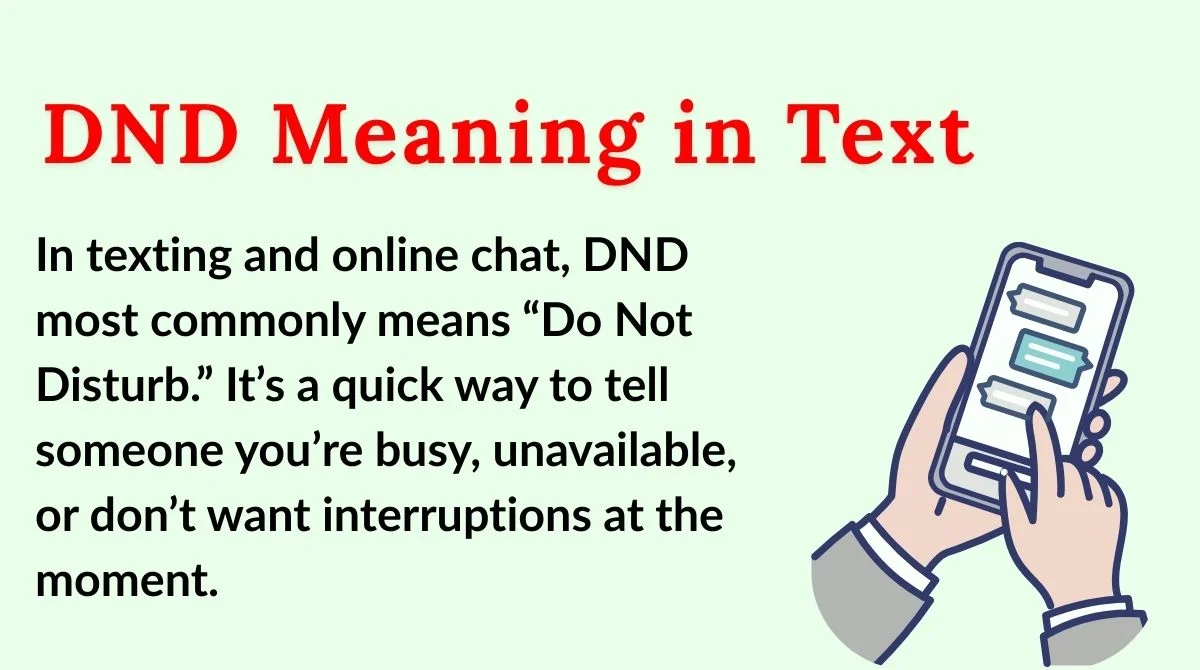
In texting and online chat, DND most commonly means “Do Not Disturb.” It’s a quick way to tell someone you’re busy, unavailable, or don’t want interruptions at the moment. Instead of explaining everything, people use DND as a polite but firm boundary.
You’ll usually see DND in short messages, status updates, or replies when someone can’t talk right now. It doesn’t mean they’re ignoring you—it simply means not now. Tone matters, though. DND can feel neutral, professional, or casual depending on how it’s used.
Typical meanings in text include:
- I’m busy right now
- I’ll reply later
- Please don’t message or call for a while
- I need focus or quiet time
DND is especially common in work chats, gaming conversations, and group messages where interruptions can be overwhelming. Sometimes it appears alone (“DND”), and other times with context (“On DND till 6pm”).
Quick examples:
- “In a meeting, DND 📵”
- “Studying right now—DND pls”
- “Phone on DND, text later”
DND Meaning in Medical
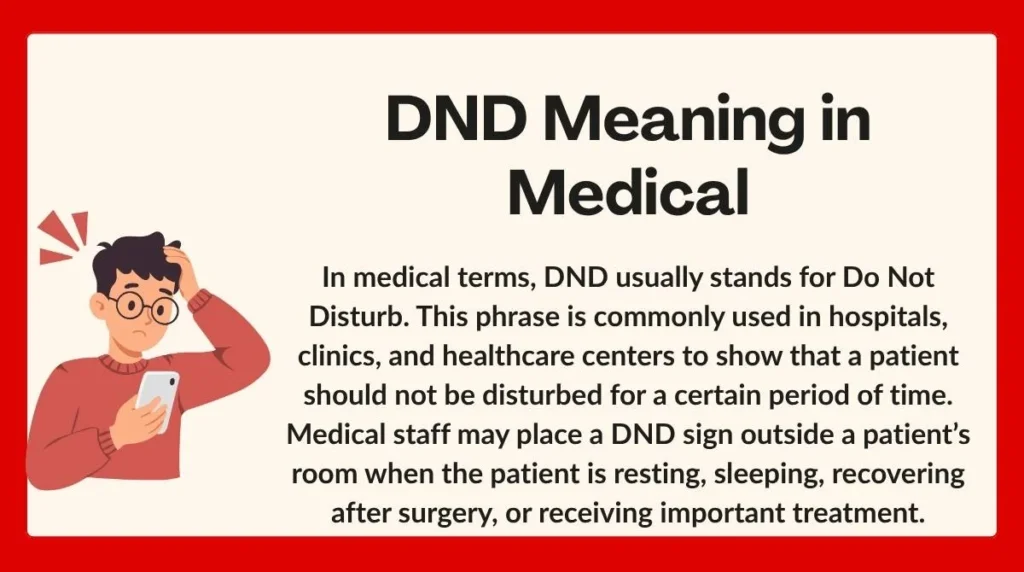
In medical terms, DND usually stands for Do Not Disturb. This phrase is commonly used in hospitals, clinics, and healthcare centers to show that a patient should not be disturbed for a certain period of time. Medical staff may place a DND sign outside a patient’s room when the patient is resting, sleeping, recovering after surgery, or receiving important treatment.
The term helps healthcare workers maintain a calm and quiet environment for patients who need extra care or privacy. In some cases, doctors may also use DND instructions to reduce unnecessary interruptions during medical procedures or examinations.
However, the meaning of DND can sometimes change depending on the medical department or hospital policy. That is why healthcare professionals usually look at the context before using or understanding the abbreviation.
Overall, DND – Do Not Disturb is mainly used to support patient comfort, recovery, and privacy in medical settings.
Full Form, Stands For & Short Meaning of DND
The full form of DND is Do Not Disturb. It’s an instruction rather than a conversation starter. In short, it means “don’t contact me right now.”
Breakdown:
- D – Do
- N – Not
- D – Disturb
Short meanings people associate with DND:
- Busy
- Unavailable
- Offline (mentally or digitally)
- Focus mode
In texting, DND works like a digital “closed door.” It doesn’t end a relationship or conversation—it just pauses it. That’s why it’s so popular in modern communication where people need quick, respectful ways to manage attention.
DND Meaning in Work
In a workplace or office environment, DND commonly means Do Not Disturb. Employees use this term to show that they are busy and should not be interrupted for a specific period of time. It is often used during meetings, focused work sessions, presentations, or important tasks.
Many communication apps like Microsoft Teams, Slack, Zoom, and mobile phones have a DND mode. When someone turns on Do Not Disturb, notifications, calls, and messages are usually silenced to help improve concentration and productivity.
In offices, DND status also helps coworkers understand when a person is unavailable. This creates a more professional and organized work environment because employees can focus without constant distractions.
Overall, DND – Do Not Disturb is widely used in work settings to improve focus, manage time better, and reduce unnecessary interruptions during important tasks or meetings.
Origin, History & First Known Use of DND
The phrase “Do Not Disturb” existed long before texting. It was commonly used on hotel door signs to signal privacy. Over time, the phrase moved into technology.
Key milestones:
- Hotels: Physical “Do Not Disturb” signs (early 1900s)
- Telephones: DND used for call-blocking features
- Smartphones: Apple and Android introduced “DND mode”
- Texting & chat: Shortened to DND for speed and clarity
As digital communication grew faster, abbreviations became essential. DND fit perfectly—short, clear, and universally understood. Its transition from physical signs to digital slang reflects how language adapts to technology.
How People Use DND in Daily Conversations
People use DND to protect time, energy, and focus. It’s not rude—it’s practical. You’ll see it in both personal and professional chats.
Common daily uses:
- During work or meetings
- While studying or sleeping
- When overwhelmed or needing space
- During gaming or streaming
Examples:
- “I’m on DND till my exam’s over 📚”
- “DND rn, will call later”
- “Weekend self-care = DND mode 😌”
The key idea is temporary unavailability. Most people expect a reply once DND ends.
DND Meaning Across WhatsApp, Instagram, TikTok & Snapchat
While the core meaning stays the same, usage varies by platform.
- WhatsApp: Status like “DND 🚫” or “On DND till evening”
- Instagram: Bio lines like “DND unless urgent”
- TikTok: Captions implying offline or mental break
- Snapchat: Direct replies like “DND rn”
Across platforms, DND signals boundaries without drama. It’s widely accepted and respected.
Different Meanings of DND in Other Fields
DND doesn’t always mean Do Not Disturb. Context matters.
Other meanings include:
- Dungeons & Dragons – Popular role-playing game
- Department of National Defence – Government use
- Do Not Detonate – Technical or military context
In texting and social media, though, Do Not Disturb is by far the most common meaning.
Common Confusions, Mistakes & Wrong Interpretations
People sometimes misread DND as:
- Anger or passive aggression
- Being ignored permanently
- A personal rejection
In reality, DND is usually neutral. It’s about timing, not feelings. Misunderstandings happen when tone or context is missing.
Mistake to avoid: replying repeatedly after someone says DND.
Similar Terms, Alternatives & Related Slang
Related terms include:
- AFK (Away From Keyboard)
- BRB (Be Right Back)
- Busy
- Offline
- Focus mode
Examples of DND in Real Chat Situations
- “Can’t talk rn, DND 😴”
- “Work mode = DND till 5”
- “Phone’s on DND, text later 📵”
- “Gaming now, DND 🎮”
How to Reply When Someone Says DND
Best responses are respectful and short.
Good replies:
- “Got it 👍”
- “No worries, talk later”
- “Okay, ping me when free”
Avoid pushing for replies unless it’s urgent.
Is DND Still Popular? Trends & Online Usage
Yes—DND is more popular than ever. With rising awareness around mental health, focus, and boundaries, people openly use DND to manage availability. Smartphones, remote work, and social media all contribute to its continued relevance.
DND isn’t fading—it’s evolving into a healthy communication norm.
FAQs: What People Also Ask
1. Does DND mean someone is ignoring you?
No, it usually means they’re busy temporarily.
2. Is DND rude in texting?
Not at all. It’s considered polite and clear.
3. Can DND mean something else in chat?
Rarely. In text, it almost always means Do Not Disturb.
4. How long does DND usually last?
It depends—minutes, hours, or until the task is done.
5. Should I reply to someone on DND?
Only if it’s urgent; otherwise, wait.
Conclusion
The DND meaning in text is simple but powerful. It stands for Do Not Disturb and helps people set clear, respectful boundaries in digital conversations.
From messaging apps to social media bios, DND signals temporary unavailability without needing long explanations.
Understanding its meaning prevents misunderstandings and improves communication, especially in a world where constant notifications can feel overwhelming.
Whether you’re the one using DND or receiving it, the key is respect and patience. As online communication continues to evolve, DND remains a useful, widely accepted term that supports focus, balance, and healthy digital habits.

✨ “Elara Winslow weaves words with wit, turning everyday thoughts into moments of joy.”