If you’ve ever received a message that simply said “SM” and paused to wonder what it meant, you’re not alone.
The SM meaning in text is one of those short abbreviations that pops up across chats, social media, and comments—often without context.
People search for it because its meaning can change depending on the conversation, platform, or even the tone of the message.
In today’s fast-paced digital world, abbreviations like SM save time and keep conversations flowing.
However, they can also cause confusion when you’re not familiar with the intent behind them. This guide breaks down everything you need to know about SM in texting—from its most common meanings to how it’s used on apps like WhatsApp, Instagram, TikTok, and Snapchat.
By the end, you’ll know exactly how to understand it, use it correctly, and reply with confidence.
What Does SM Mean in Text & Chat?
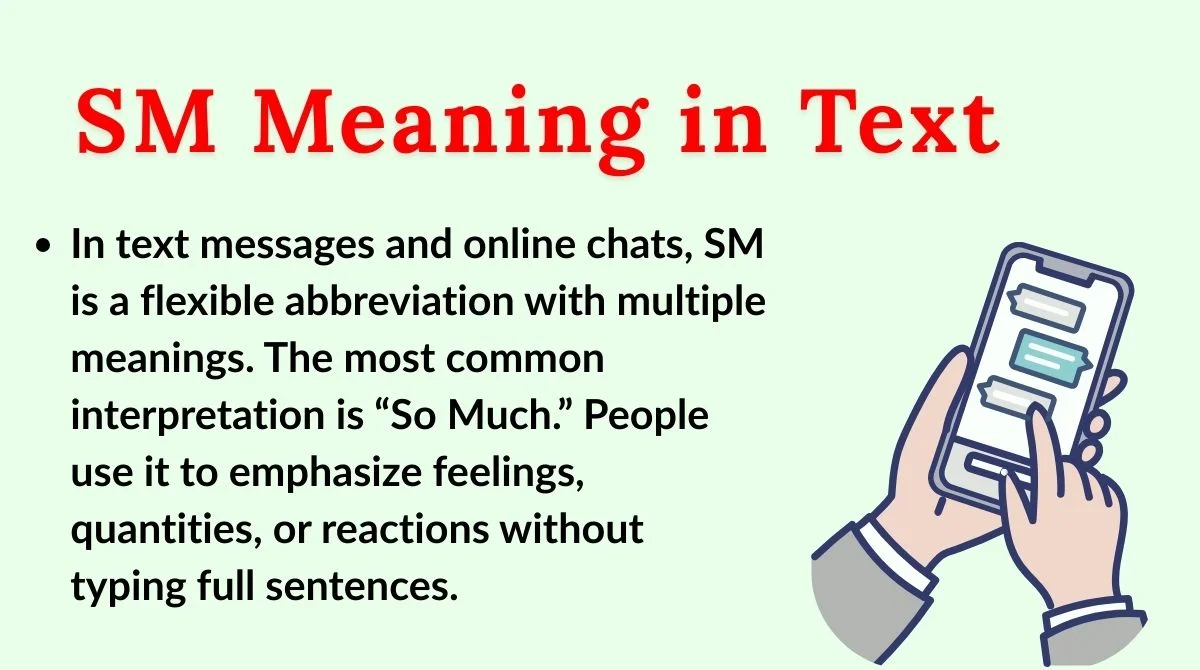
In text messages and online chats, SM is a flexible abbreviation with multiple meanings. The most common interpretation is “So Much.” People use it to emphasize feelings, quantities, or reactions without typing full sentences.
For example, someone might say they miss you “SM,” meaning they miss you a lot. It’s casual, friendly, and widely understood in informal conversations.
However, SM can also stand for “Social Media,” “Some,” or “Send Me,” depending on context. That’s why tone, surrounding words, and platform matter. Unlike fixed abbreviations, SM relies heavily on how it’s used in a sentence.
Quick breakdown:
- Expressing emotion: “I like this SM”
- Referring to platforms: “I saw it on SM”
- Asking for something: “SM the details”
Because it’s short and adaptable, SM fits naturally into modern texting culture. Still, misunderstanding it is common, especially for people new to slang or chatting across different age groups.
Full Form, Stands For & Short Meaning of SM
The abbreviation SM doesn’t have just one official full form in texting. Instead, it changes based on intent. Here are the most common meanings people associate with SM:
- So Much – the most popular and casual usage
- Social Media – common in marketing or online discussions
- Send Me – used when asking for files, links, or info
- Some – informal shorthand in quick replies
Among these, “So Much” dominates everyday chats, especially in emotional or expressive messages. For example, “Thanks SM” means “Thanks so much.”
In professional or informational contexts, SM usually shifts to Social Media, especially when talking about platforms, growth, or trends.
Understanding the full form depends on:
- The sentence structure
- Who you’re talking to
- The platform you’re using
When in doubt, reading the message out loud often makes the intended meaning obvious.
Origin, History & First Known Use of SM
Like many texting abbreviations, SM emerged from early internet chat rooms and SMS messaging. When character limits were strict and typing on numeric keypads was slow, users shortened common phrases wherever possible.
“So much” quickly became “SM” because:
- It saved time
- It was easy to remember
- It felt natural in casual writing
As texting evolved into instant messaging and social media, SM stuck around. Its adaptability helped it survive while many older abbreviations faded away.
The rise of platforms like WhatsApp, Instagram, and Snapchat gave SM new life, especially among younger users who favor short, expressive language. Today, it’s not tied to one generation—it’s used by teens, adults, and even brands in casual engagement.
How People Use SM in Daily Conversations
In everyday chats, SM is all about convenience and emotion. It often replaces longer phrases without changing the message’s tone.
Common real-life uses include:
- Expressing gratitude: “Thanks SM!”
- Showing affection: “Miss you SM ❤️”
- Emphasizing opinions: “I love this SM”
People rarely capitalize on grammar when using SM. It fits smoothly into informal conversations and feels natural rather than forced.
You’ll mostly see it in:
- One-to-one chats
- Group conversations
- Comment replies
Because it’s short and friendly, SM helps keep conversations light and flowing—perfect for modern digital communication.
SM Meaning Across WhatsApp, Instagram, TikTok & Snapchat
The SM meaning in text stays mostly consistent across platforms, but usage style changes slightly.
- WhatsApp: Often emotional or conversational
- “Thanks SM 😊”
- Instagram: Used in comments or DMs
- “Love this pic SM!”
- TikTok: Appears in captions or replies
- “This trend hits SM”
- Snapchat: Casual, fast replies
- “Miss you SM 💛”
On visual platforms, SM often pairs with emojis to amplify emotion. On messaging apps, it works as a quick response without breaking the chat’s rhythm.
Different Meanings of SM in Other Fields
Outside texting, SM can mean very different things:
- Service Mark (business/legal)
- Sales Manager (corporate roles)
- Statute Mile (measurement)
- Sadomasochism (adult context)
This is why context matters so much. In casual texts, it almost never refers to these meanings—but in professional or academic settings, it might.
Common Confusions, Mistakes & Wrong Interpretations
The biggest mistake with SM is assuming it always means one thing. Misreading tone can lead to awkward replies.
Common errors:
- Confusing “So Much” with “Social Media”
- Overusing SM in formal conversations
- Using it without enough context
If you’re unsure, asking a simple follow-up question is better than guessing.
Similar Terms, Alternatives & Related Slang
If you want alternatives to SM, here are some popular options:
- A lot
- Very much
- TYSM (Thank You So Much)
- Much
- Loads
Examples of SM in Real Chat Situations
Quick chat examples:
- “Thanks SM for helping me 🙏”
- “I like this song SM 🎶”
- “Miss you SM 😢”
- “That helped SM, appreciate it!”
These examples show how natural and expressive SM can be.
How to Reply When Someone Says SM
Your reply depends on context:
- Gratitude → “Anytime!” or “No problem 😊”
- Emotion → “Aww, same here ❤️”
- Request → “Sure, sending now!”
Matching tone keeps the conversation smooth.
Is SM Still Popular? Trends & Online Usage
Yes, SM is still popular. While new slang appears constantly, SM remains relevant because it’s simple, versatile, and easy to understand. It continues to show up in chats, captions, and comments across platforms.
FAQs About SM Meaning in Text
1. What does SM usually mean in texting?
Most commonly, it means “So Much.”
2. Is SM formal or informal?
It’s informal and best for casual conversations.
3. Can SM mean Social Media?
Yes, especially in marketing or tech contexts.
4. Is SM used by younger people only?
No, people of all ages use it.
5. Should I use SM in professional messages?
Only if the tone is casual; otherwise, avoid it.
Conclusion
The SM meaning in text may seem small, but it plays a big role in modern communication. Most of the time, it simply means “So Much,” helping people express emotion quickly and naturally.
Its flexibility allows it to adapt across platforms like WhatsApp, Instagram, TikTok, and Snapchat, making it a lasting part of digital slang.
Understanding SM isn’t just about knowing the definition—it’s about reading context, tone, and intent. Once you get comfortable with it, SM becomes an easy tool for expressing appreciation, affection, or emphasis without overthinking your message.
As online language continues to evolve, abbreviations like SM prove that sometimes, less really is more.

✨ “Elara Winslow weaves words with wit, turning everyday thoughts into moments of joy.”