If you’ve ever received a message saying “OTW” and wondered what it meant, you’re not alone.
The term pops up constantly in texts, chats, and social media, making many people search for its exact meaning and usage.
OTW meaning in text is especially popular because it’s short, fast, and fits perfectly with modern online communication.
People use it to save time, sound casual, and keep conversations moving. Whether you’ve seen it on WhatsApp, Instagram, or Snapchat, understanding OTW helps you respond naturally and confidently.
In this article, we’ll break down what OTW means, where it comes from, how people actually use it today, and what it can mean in different contexts. By the end, you’ll know exactly when to use OTW—and when not to.
What Does OTW Mean in Text & Chat?
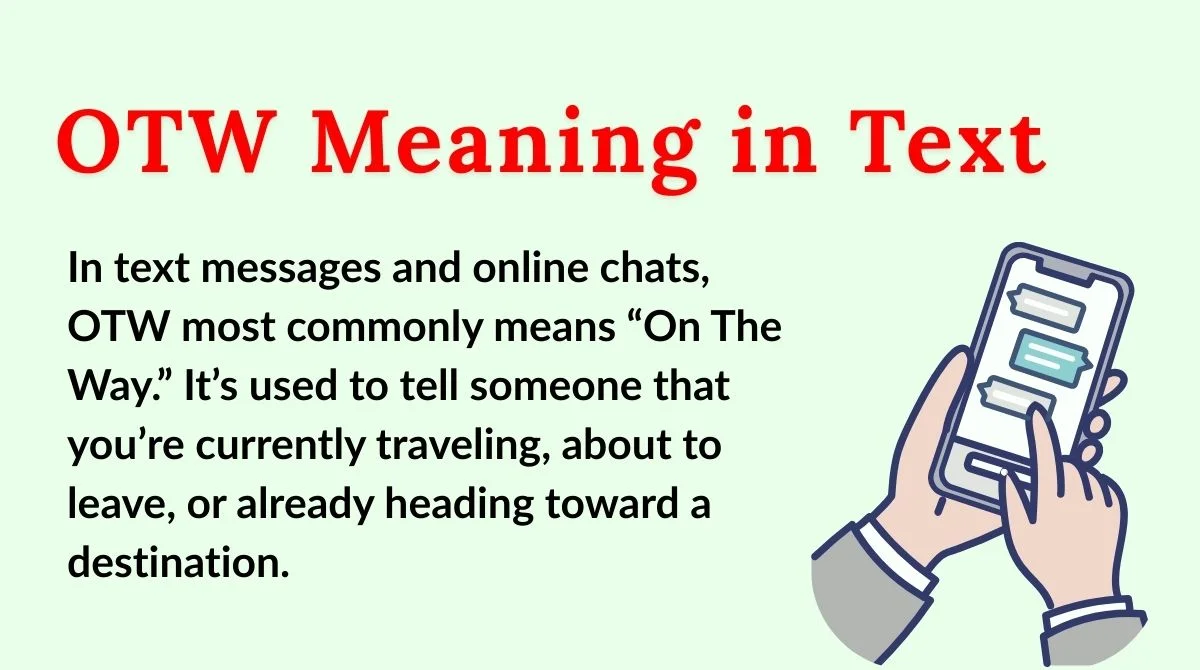
In text messages and online chats, OTW most commonly means “On The Way.” It’s used to tell someone that you’re currently traveling, about to leave, or already heading toward a destination. The phrase is popular because it’s quick, clear, and informal.
People often use OTW to:
- Confirm they’re coming
- Reassure someone they’re not late (or trying not to be 😅)
- Keep conversations short and efficient
OTW doesn’t usually give details like location or arrival time. Instead, it signals movement or progress. Depending on the context, it can mean:
- Already moving
- Just about to leave
- Starting a task or process
Because tone is missing in text, OTW can sometimes sound vague. That’s why people often pair it with emojis or follow-up messages to clarify.
Quick examples:
- “I’m OTW now 🚗”
- “Food is OTW 🍕”
- “OTW, be there soon!”
Full Form, Stands For & Short Meaning of OTW
The full form of OTW is On The Way.
Short meaning:
➡️ Currently traveling or in progress
OTW is considered an internet abbreviation or text slang, not formal English. You’ll rarely see it in professional emails, but it’s everywhere in casual conversations.
Common variations:
- “OTW rn” (on the way right now)
- “Still OTW”
- “OTW soon”
It’s flexible and works across different situations—meeting friends, deliveries, events, or even metaphorical progress like projects.
Origin, History & First Known Use of OTW
OTW existed long before texting, but it became widely popular with the rise of SMS messaging in the late 1990s and early 2000s. Character limits pushed users to shorten common phrases, and “On The Way” naturally became OTW.
As instant messaging platforms like MSN, AOL, and later WhatsApp and iMessage grew, OTW stuck around because:
- It’s intuitive
- Easy to remember
- Universally understood
Today, OTW is considered standard digital shorthand, not trendy slang—meaning it’s stable and widely accepted.
How People Use OTW in Daily Conversations
OTW is mostly used for status updates. It answers the unspoken question: Where are you?
Everyday uses include:
- Meeting friends
- Heading to work
- Deliveries or orders
- Starting tasks
Examples:
- “Running late but OTW!”
- “Driver says your order is OTW”
- “OTW to the gym 💪”
Tone matters. Adding emojis can make OTW feel friendly, apologetic, or excited.
OTW Meaning Across WhatsApp, Instagram, TikTok & Snapchat
The meaning stays mostly the same across platforms, but the vibe changes.
- WhatsApp: Literal and practical
“OTW, see you in 10” - Instagram DMs: Casual or flirty
“OTW to steal your fries 😌” - TikTok: Often used in captions or comments
“Glow-up OTW ✨” - Snapchat: Short, visual, informal
“OTW 👀”
On social media, OTW can be figurative, meaning progress rather than movement.
Different Meanings of OTW in Other Fields
While rare, OTW can mean other things depending on context:
- Gaming: On the way (same meaning)
- Business/Logistics: Shipment or process in progress
- Aviation/Transport: En route status
- Slang/Metaphorical: Success or change in progress
“Promotion OTW”
Context always decides the meaning.
Common Confusions, Mistakes & Wrong Interpretations
Some people misunderstand OTW as:
- “Out the window” ❌
- “Over the weekend” ❌
These are incorrect in texting contexts.
Common mistakes:
- Using OTW in formal emails
- Assuming exact arrival time
- Using it without context
If clarity matters, add details:
- “OTW, 15 mins away”
Similar Terms, Alternatives & Related Slang
Alternatives to OTW:
- En route
- Coming now
- Heading there
- Almost there
Related slang (internal linking ideas):
- BRB
- ETA
- ASAP
- AFK
Linking to these terms helps readers understand texting language better.
Examples of OTW in Real Chat Situations
- “Where are you?”
→ “OTW 🚶♂️” - “Is the package coming today?”
→ “Yep, it’s OTW 📦” - “Did you start the project?”
→ “OTW, working on it!”
How to Reply When Someone Says OTW
Your reply depends on tone and urgency.
Simple replies:
- “Okay!”
- “Cool 👍”
- “See you soon!”
Friendly replies:
- “Drive safe 🚗”
- “Take your time 😊”
Is OTW Still Popular? Trends & Online Usage
Yes—OTW is still widely used and shows no signs of disappearing. Unlike trend-based slang, it’s practical and timeless. As long as people travel, wait, and communicate online, OTW will stay relevant.
FAQs About OTW Meaning in Text
1. What does OTW mean in texting?
It means On The Way.
2. Is OTW formal or informal?
Informal. Best for chats and casual messages.
3. Can OTW mean something else?
Yes, metaphorically it can mean “in progress.”
4. Is OTW rude?
No, but it can feel vague without context.
5. Do people still use OTW today?
Yes, it’s extremely common across all platforms.
Conclusion
Understanding the OTW meaning in text makes online communication easier and more natural.
At its core, OTW simply means On The Way, but its flexibility allows it to fit many situations—from physical travel to metaphorical progress.
It’s short, friendly, and universally understood, which is why it remains popular across messaging apps and social media platforms.
While it’s informal and shouldn’t be used in professional writing, it’s perfect for everyday conversations.
By paying attention to context, tone, and platform, you can use OTW confidently and respond appropriately when others use it.
Now, the next time someone texts “OTW,” you’ll know exactly what they mean—and how to reply.

✨ “Elara Winslow weaves words with wit, turning everyday thoughts into moments of joy.”