If you’ve spent any time texting, scrolling social media, or chatting online, chances are you’ve seen someone drop “NGL” into a sentence.
It’s short, casual, and everywhere—but what does it actually mean? Many people search for the NGL meaning in text because the phrase can feel confusing at first, especially when tone matters in digital conversations.
One small acronym can completely change how a message feels.
NGL is popular because it helps people express honesty quickly, without sounding too formal. It’s often used to soften opinions, share feelings, or add transparency in casual chats.
Whether you’re texting friends, replying on Instagram, or reading comments on TikTok, understanding NGL helps you read between the lines and respond naturally.
Let’s break down what NGL means, where it came from, and how people really use it today.
What Does NGL Mean in Text & Chat?
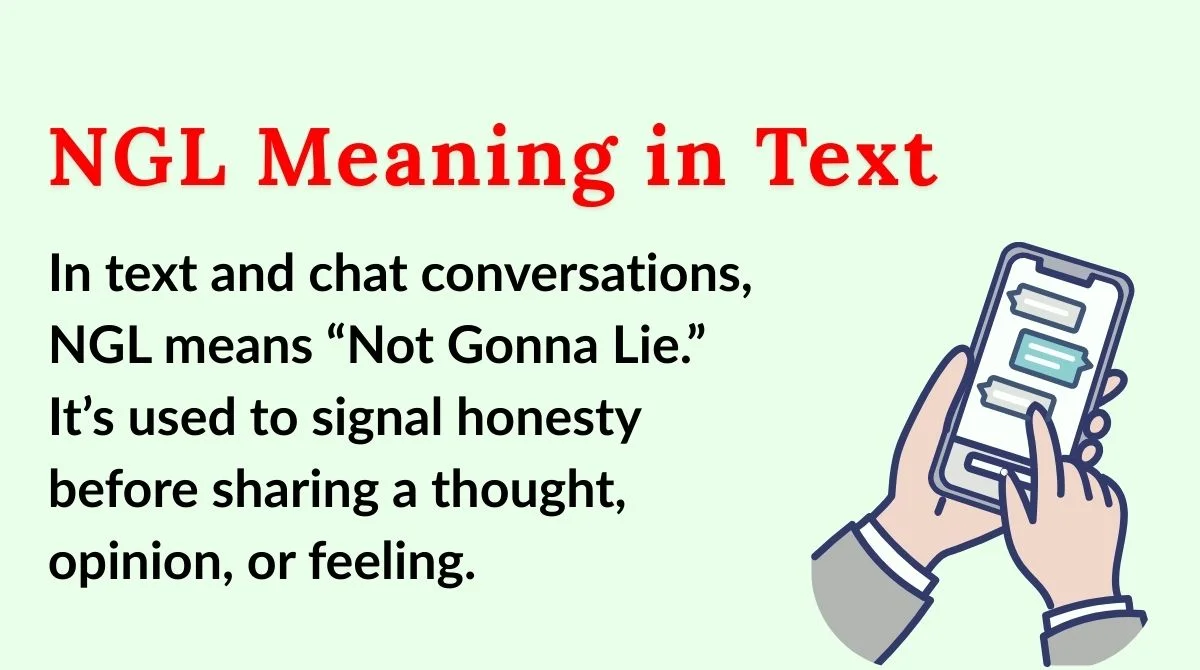
In text and chat conversations, NGL means “Not Gonna Lie.” It’s used to signal honesty before sharing a thought, opinion, or feeling. When someone says NGL, they’re basically saying, “I’m about to be real with you.”
The phrase sets a conversational tone. It often prepares the reader for something personal, blunt, or emotionally honest—but not necessarily negative. Sometimes it introduces praise, sometimes criticism, and sometimes just a random thought.
People use NGL because texting lacks voice tone and facial expressions. Adding NGL helps clarify intent. It can make a message feel more open, casual, and trustworthy. Instead of sounding harsh or overly direct, NGL softens the delivery.
Common situations where NGL appears:
- Sharing an opinion: “NGL, that movie was way better than I expected.”
- Admitting feelings: “NGL, I kinda miss you.”
- Being honest politely: “NGL, I don’t think that plan will work.”
NGL is rarely used in formal writing. You’ll mostly see it in casual digital spaces where authenticity matters more than grammar rules. Its flexibility is exactly why it’s become such a staple in modern texting culture.
Full Form, Stands For & Short Meaning of NGL
The full form of NGL is “Not Gonna Lie.”
Broken down simply:
- Not – indicating denial or honesty
- Gonna – informal version of “going to”
- Lie – meaning to be dishonest
Together, the phrase means: “I’m being honest right now.”
The short meaning of NGL is “to be honest” or “truthfully.” It often works the same way as phrases like “TBH” or “honestly,” but with a slightly more casual and conversational vibe.
What makes NGL unique is its tone. It doesn’t feel overly serious, yet it still signals sincerity. That balance makes it perfect for texting and social media, where people want to sound real without sounding dramatic.
NGL can introduce:
- Opinions (“NGL, I love that song.”)
- Confessions (“NGL, I forgot to reply.”)
- Reactions (“NGL, that surprised me.”)
Because it’s informal, NGL fits naturally into everyday chats. It’s short, easy to type, and widely understood—especially among younger internet users. Over time, it’s become less about literal “lying” and more about setting an honest tone.
Origin, History & First Known Use of NGL
The phrase “not gonna lie” existed in spoken English long before texting culture. People used it in conversation as a casual way to preface honesty. However, NGL as an abbreviation emerged with the rise of SMS texting and online chatrooms in the early 2000s.
As character limits mattered more, users shortened common phrases. NGL followed the same path as LOL, BRB, and TBH. It became especially popular on instant messaging platforms and forums where fast replies were the norm.
Its widespread use accelerated with social media. Twitter (now X), Instagram captions, and TikTok comments helped normalize NGL as everyday slang. The acronym fit perfectly into short-form content, where quick emotional clarity is important.
Interestingly, NGL also gained a second layer of meaning with the launch of the NGL anonymous Q&A app, which made the term even more visible—especially among teens. Still, in most text conversations, the original meaning remains dominant.
Over time, NGL evolved from a literal honesty disclaimer into a casual tone marker. Today, people often use it automatically, not because they were lying before, but because it sounds natural and relatable.
How People Use NGL in Daily Conversations
In daily conversations, NGL acts like a conversational “heads-up.” It tells the other person that what follows is genuine, unfiltered, or emotionally honest. Most of the time, it’s friendly and harmless.
People commonly use NGL to:
- Share opinions without sounding rude
- Admit something slightly awkward
- Express emotions casually
- React honestly to situations
Examples in everyday use:
- “NGL, I’m tired today.”
- “NGL, that outfit looks amazing on you.”
- “NGL, I wasn’t expecting that.”
NGL is often placed at the beginning of a sentence, but it can also appear in the middle. It works best in informal settings like texts, DMs, comments, or group chats.
Tone matters. Depending on context, NGL can feel:
- Playful 😄
- Vulnerable 🥺
- Straightforward 😐
Because it’s so flexible, NGL helps people sound human online. It bridges the gap between honesty and politeness, making conversations smoother and more relatable.
NGL Meaning Across WhatsApp, Instagram, TikTok & Snapchat
While the core meaning stays the same, NGL can feel slightly different depending on the platform.
WhatsApp:
On WhatsApp, NGL is usually personal. It’s used in one-on-one chats or close group conversations to express real feelings or opinions.
Instagram:
Here, NGL appears in captions and comments. It often introduces compliments or opinions:
- “NGL, this photo is fire 🔥”
TikTok:
On TikTok, NGL is reaction-based. Users use it to comment honestly on videos:
- “NGL, this made my day 😂”
Snapchat:
Snapchat users often connect NGL with anonymous messages, thanks to the NGL app. Still, in normal chats, it keeps its original meaning.
Across platforms, NGL signals authenticity. The vibe changes, but the intention—honest expression—remains the same.
Different Meanings of NGL in Other Fields
Although uncommon, NGL can mean different things outside casual texting. Context is key.
Other meanings include:
- National Grid Line (engineering/geography)
- Natural Gas Liquids (energy industry)
- Non-Guideline Loan (finance)
These meanings appear mostly in professional or technical contexts, not everyday chats. If you see NGL in a document, report, or industry discussion, it likely doesn’t mean “not gonna lie.”
In casual digital communication, though, NGL almost always refers to honesty, not technical terms.
Common Confusions, Mistakes & Wrong Interpretations
A common mistake is assuming NGL always introduces negativity. That’s not true. It can lead to compliments just as often as criticism.
Another confusion comes from mixing it up with the NGL app. Seeing “NGL?” doesn’t always mean anonymous questions—it could simply be the slang term.
People also sometimes overuse NGL, which can weaken its impact. When everything is “NGL,” it stops feeling special.
Key things to remember:
- NGL ≠ rude
- NGL ≠ serious confession every time
- Context always matters
Similar Terms, Alternatives & Related Slang
If you understand NGL, you’ll recognize these related terms easily:
- TBH – To Be Honest
- FR – For Real
- Honestly – Plain English alternative
- Low-key – Subtle honesty
Each term signals honesty, but NGL feels more casual and conversational.
Examples of NGL in Real Chat Situations
Quick, realistic examples:
- “NGL, I needed that laugh 😂”
- “NGL, I’m nervous about tomorrow.”
- “That food? NGL, amazing 😋”
- “NGL, I didn’t expect you to reply.”
These examples show how naturally NGL fits into everyday messages.
How to Reply When Someone Says NGL
The best reply depends on context. Usually, you don’t need to acknowledge NGL directly—just respond to the message.
Possible responses:
- Agreeing: “Yeah, I feel the same.”
- Reassuring: “That makes sense.”
- Curious: “Why do you think that?”
If someone shares feelings, respond with empathy. NGL often opens the door to honest conversation.
Is NGL Still Popular? Trends & Online Usage
Yes—NGL is still very popular. It remains common across texting, memes, comments, and short-form videos. While slang constantly evolves, NGL has stayed relevant because honesty never goes out of style.
Its simplicity keeps it alive. New terms come and go, but NGL continues to feel natural, especially among Gen Z and millennials.
FAQs: People Also Ask
1. What does NGL mean in texting?
It means “Not Gonna Lie,” used to express honesty.
2. Is NGL rude or polite?
It’s usually polite and casual, not rude.
3. Can NGL be used positively?
Yes, very often—especially for compliments.
4. Is NGL formal English?
No, it’s informal slang.
5. Does NGL always mean the same thing?
In chats, yes. In technical fields, context may change.
Conclusion
Understanding the NGL meaning in text helps you communicate more naturally in today’s digital world.
At its core, NGL is about honesty—but delivered in a relaxed, human way. Whether someone is sharing feelings, giving an opinion, or reacting to a moment, NGL signals authenticity without pressure.
Its popularity across platforms like WhatsApp, Instagram, TikTok, and Snapchat shows how much people value realness in online conversations.
While it can have other meanings in professional contexts, in everyday chats it almost always means “I’m being honest.”
Once you recognize how and why people use NGL, reading and responding becomes easier—and more genuine. Language evolves, but honesty always stays relevant.

✨ “Elara Winslow weaves words with wit, turning everyday thoughts into moments of joy.”