If you’ve seen DWBI pop up in a text message, comment, or chat and wondered what it means, you’re not alone.
Internet slang and abbreviations evolve fast, and DWBI is one of those terms that sparks curiosity because it’s not always obvious at first glance.
People usually search for the DWBI meaning in text to avoid misunderstandings or awkward replies in conversations.
Whether it appears in casual chats, social media captions, or direct messages, knowing what DWBI stands for helps you respond naturally and confidently.
In this article, we’ll break down its meaning, origin, usage across platforms, and how people actually use it in real conversations.
Everything is explained in simple, friendly language—no jargon, no confusion—so you can understand and use DWBI like a pro.
What Does DWBI Mean in Text & Chat?
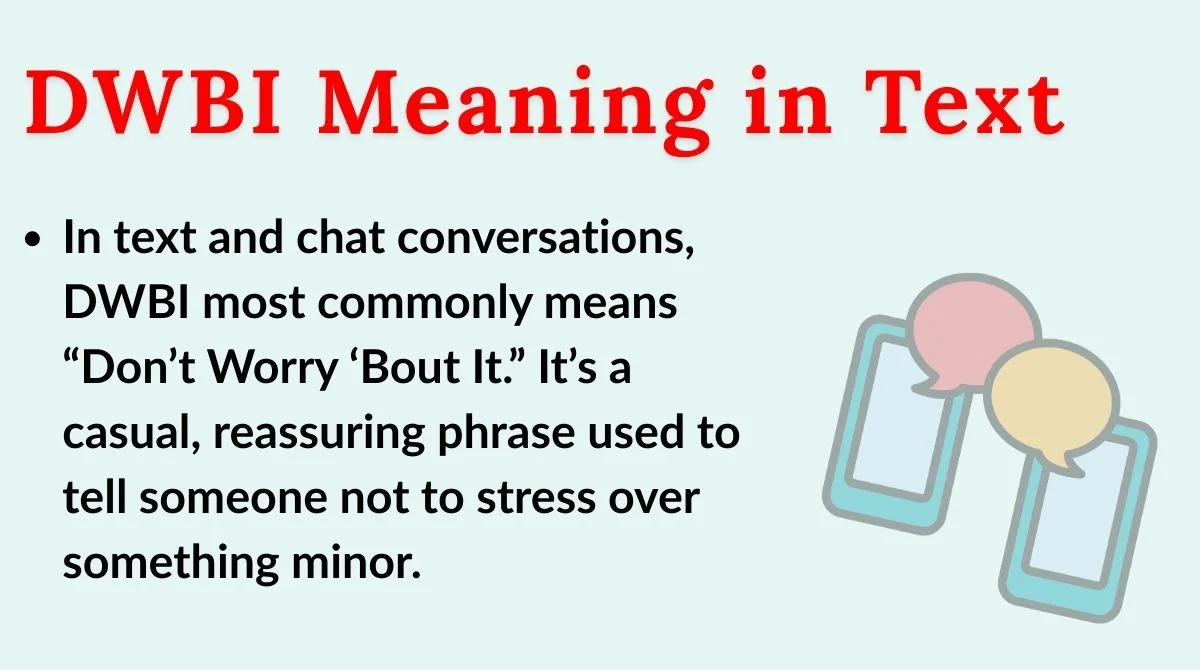
In text and chat conversations, DWBI most commonly means “Don’t Worry ‘Bout It.” It’s a casual, reassuring phrase used to tell someone not to stress over something minor.
People often use it when they want to sound relaxed, friendly, and informal.
DWBI usually appears in conversations where:
- Someone apologizes unnecessarily
- A small mistake is mentioned
- Reassurance is needed quickly
It carries a laid-back tone and can feel warmer than saying “it’s fine.” Because it’s short, it fits perfectly into fast-paced messaging where typing speed matters.
Quick chat examples:
- “Sorry I replied late.” → “DWBI 😊”
- “I forgot to send that file.” → “DWBI, it wasn’t urgent.”
- “Hope that didn’t mess things up.” → “DWBI at all!”
The meaning depends heavily on context, but it’s almost always positive and calming.
Full Form, Stands For & Short Meaning of DWBI
The full form of DWBI is:
D – Don’t
W – Worry
B – ’Bout
I – It
So, DWBI = Don’t Worry ’Bout It
In short, it means:
- “It’s okay”
- “No problem”
- “Don’t stress about it”
This abbreviation is informal and conversational. You wouldn’t typically use it in professional emails, but it’s perfect for texts, DMs, and comments. Compared to longer reassurance phrases, DWBI feels more relaxed and friendly.
Origin, History & First Known Use of DWBI
DWBI likely originated from casual spoken English, especially in American slang, where “don’t worry about it” is often shortened verbally to “don’t worry ’bout it.” As texting became more common, people began shortening phrases to save time and effort.
The abbreviation gained traction during:
- Early SMS texting (character limits mattered)
- Instant messaging platforms
- Social media comment culture
Unlike older abbreviations like LOL or BRB, DWBI never became mainstream dictionary slang—but it remains popular in everyday digital conversations. Its usage grew organically, not through memes or viral trends, which is why many people still look it up today.
How People Use DWBI in Daily Conversations
DWBI is used to de-escalate tension and keep conversations smooth. It often appears as a quick response rather than a conversation starter.
Common situations include:
- Responding to apologies
- Downplaying small issues
- Reassuring friends
Daily use examples:
- “My bad for the typo.” → “DWBI 👍”
- “I might be late.” → “DWBI, take your time.”
- “Hope I didn’t annoy you.” → “DWBI 😄”
The tone is usually calm, friendly, and forgiving.
DWBI Meaning Across WhatsApp, Instagram, TikTok & Snapchat
Across platforms, the DWBI meaning in text stays consistent, but tone can vary slightly:
- WhatsApp: Friendly reassurance in private chats
- Instagram: Casual replies to comments or DMs
- TikTok: Used in comment sections to dismiss negativity
- Snapchat: Quick, informal reassurance in snaps
On visual platforms like TikTok and Snapchat, DWBI often appears with emojis or slang to match the vibe.
Different Meanings of DWBI in Other Fields
While rare, DWBI can have different meanings outside texting:
- Business/Internal codes: Company-specific acronyms
- Technical contexts: Project or system abbreviations
However, in everyday online communication, “Don’t Worry ’Bout It” is by far the most common meaning.
Common Confusions, Mistakes & Wrong Interpretations
People sometimes misinterpret DWBI as:
- Rude or dismissive (it usually isn’t)
- Sarcastic (depends on tone and emojis)
- A negative response
To avoid confusion, many users add emojis or extra words for clarity.
Similar Terms, Alternatives & Related Slang
Related abbreviations include:
- NBD – No Big Deal
- IDC – I Don’t Care
- It’s cool
- All good
Examples of DWBI in Real Chat Situations
- “Oops, wrong link.” → “DWBI 😅”
- “Sorry, I forgot yesterday.” → “DWBI, happens.”
- “Hope I didn’t mess up.” → “DWBI at all!”
How to Reply When Someone Says DWBI
Good replies include:
- “Thanks 😊”
- “Appreciate it!”
- “Got it 👍”
You don’t need a long response—DWBI already signals closure.
Is DWBI Still Popular? Trends & Online Usage
DWBI isn’t viral slang, but it’s consistently used. Its simplicity keeps it relevant, especially in casual, one-on-one chats. It may not trend on TikTok hashtags, but it’s quietly common.
FAQs About DWBI Meaning in Text
1. What does DWBI mean in texting?
It means “Don’t Worry ’Bout It.”
2. Is DWBI rude?
No, it’s usually reassuring and friendly.
3. Can I use DWBI professionally?
It’s best for casual chats, not formal messages.
4. Is DWBI the same as NBD?
Yes, they’re very similar in meaning.
5. Do people still use DWBI?
Yes, especially in private messages and DMs.
Conclusion
Understanding the DWBI meaning in text helps you communicate more naturally online. At its core, DWBI is a simple, friendly way to reassure someone and keep conversations stress-free.
While it may not be flashy or viral slang, its usefulness lies in how easily it fits into everyday chats.
Whether you’re replying to an apology, easing tension, or just keeping things casual, DWBI gets the message across quickly and clearly.
Now that you know what it means, where it came from, and how to use it, you can respond with confidence—and maybe even sound a little more relaxed doing it.

✨ “Elara Winslow weaves words with wit, turning everyday thoughts into moments of joy.”