The internet is full of slang, abbreviations, and shorthand expressions that can feel confusing if you’re not constantly online.
One term that often sparks curiosity is CTFU, especially when it pops up in texts, comments, or social media replies.
People usually search for the CTFU meaning in text because they’ve seen it used in a funny or emotional context and want to understand the tone behind it.
Is it serious? Is it rude? Or is it just playful internet humor?
CTFU is popular in casual digital conversations, where speed and emotion matter more than perfect grammar.
Understanding it helps you read messages more accurately and respond in the right way. In this guide, we’ll break down what CTFU means, where it came from, how people use it today, and how you can reply naturally without sounding awkward.
What Does CTFU Mean in Text & Chat?
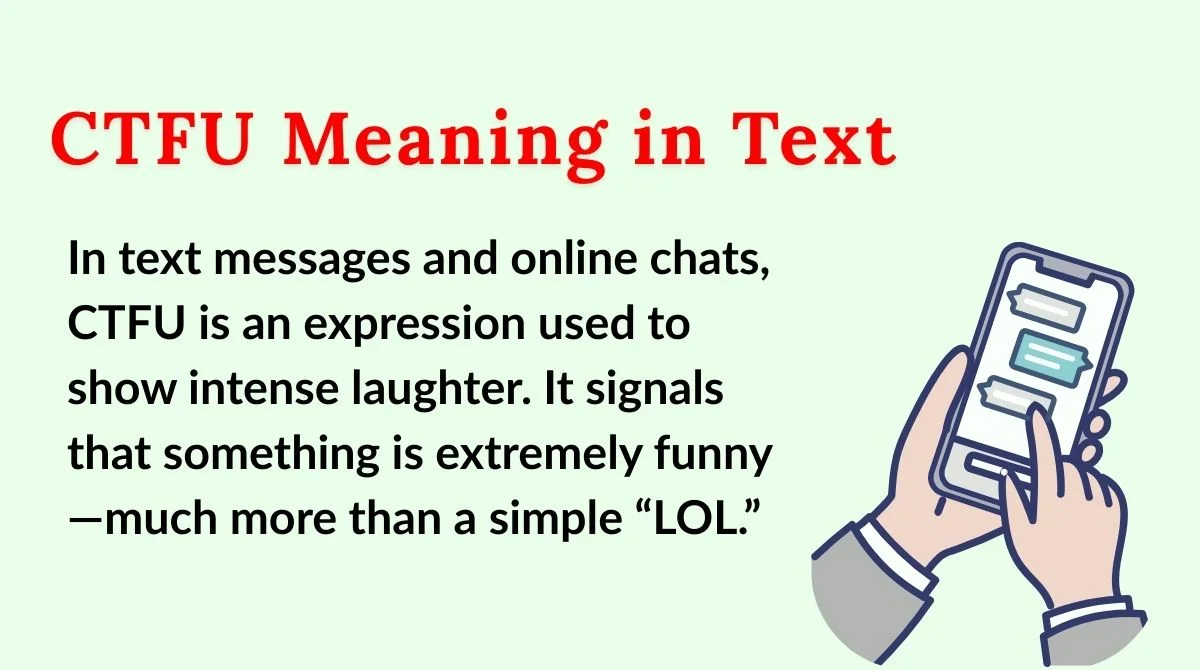
In text messages and online chats, CTFU is an expression used to show intense laughter. It signals that something is extremely funny—much more than a simple “LOL.”
When someone types CTFU, they’re usually reacting to a joke, meme, or comment that genuinely caught them off guard.
Unlike mild laughter terms, CTFU adds emphasis. It suggests uncontrollable laughter rather than a polite chuckle.
This makes it popular in informal conversations between friends who are comfortable using bold or edgy language.
CTFU is often used:
- As a direct reaction to something funny
- To exaggerate humor for dramatic effect
- To match the casual, unfiltered tone of online chats
It’s rarely used in professional or formal communication. Instead, you’ll see it in group chats, comment sections, or private DMs where people are relaxed and expressive.
Because of its strong tone, CTFU is usually written in all caps, though lowercase versions appear too. The emotional meaning stays the same either way.
Full Form, Stands For & Short Meaning of CTFU
CTFU stands for “Cracking The F* Up.”** It’s a slang abbreviation that emphasizes intense laughter. The phrase itself is informal and includes strong language, which is why it’s mostly limited to casual settings.
Short meaning of CTFU:
- Laughing extremely hard
- Finding something unbelievably funny
- Being unable to stop laughing
People choose CTFU over alternatives like LOL or LMAO when they want to show a stronger emotional reaction. It’s not subtle—it’s expressive and bold.
Because of the explicit word in its full form, many users prefer to keep it abbreviated. This allows them to convey the feeling without typing the full phrase.
Important note: while CTFU is playful, it may not be appropriate in conversations with coworkers, elders, or people who prefer clean language.
Origin, History & First Known Use of CTFU
CTFU originated from early internet chat culture, especially in online forums, instant messaging platforms, and gaming communities.
As internet users looked for faster ways to express emotions, abbreviations like LOL evolved into stronger versions such as LMAO, ROFL, and eventually CTFU.
The phrase gained traction in the late 2000s and early 2010s, when texting and social media became mainstream. During this period, expressive slang became a core part of digital identity, especially among younger users.
CTFU spread because:
- It was easy to type
- It felt more intense than older slang
- It matched meme culture and reaction humor
Unlike traditional acronyms, CTFU carried emotional weight. It wasn’t just about laughing—it was about how hard you were laughing.
Over time, it became a staple in informal online language, especially in communities that value humor and authenticity.
How People Use CTFU in Daily Conversations
In everyday digital conversations, CTFU is usually a reaction rather than a statement. People drop it after seeing something hilarious, unexpected, or absurd.
Common usage patterns include:
- Responding to a joke
- Reacting to a meme or video
- Replying to a sarcastic comment
Examples in daily chats:
- “That video was wild 😂 CTFU”
- “Bro, I’m CTFU right now”
- “CTFU, I didn’t see that coming”
Sometimes it’s used alone, and other times it’s paired with emojis or extra text for emphasis. The goal is always the same: show genuine amusement.
Because it’s expressive, people rarely overthink it. It’s spontaneous, emotional, and informal—perfect for fast-paced chats.
CTFU Meaning Across WhatsApp, Instagram, TikTok & Snapchat
While the core meaning stays the same, CTFU can feel slightly different depending on the platform.
WhatsApp:
Used in private or group chats with friends. Often paired with emojis or voice notes.
Instagram:
Common in DMs and comment replies, especially under memes and reels.
TikTok:
Frequently seen in comments reacting to funny or unexpected videos.
Snapchat:
Used in quick replies to snaps, often shortened or paired with Bitmoji reactions.
Across platforms, CTFU always signals strong laughter. The difference lies in how casually it’s delivered and how public the conversation is.
Different Meanings of CTFU in Other Fields
Outside of casual slang, CTFU has very limited alternative meanings. Unlike some abbreviations, it’s not commonly used in technical, academic, or professional fields.
In rare cases, people may:
- Misread it as a technical acronym
- Assume it’s a typo
However, in modern usage, CTFU is almost exclusively slang-related. If you see it in a text or comment, it nearly always refers to laughter.
Common Confusions, Mistakes & Wrong Interpretations
Some people misunderstand CTFU because:
- They’re unfamiliar with internet slang
- They assume it’s offensive without context
- They confuse it with similar acronyms
Common mistakes include:
- Thinking it’s an insult
- Using it in formal messages
- Misreading the tone as aggressive
CTFU is not meant to offend. It’s expressive, not negative. Context matters—when used among friends, it’s almost always playful.
Similar Terms, Alternatives & Related Slang
If you’re uncomfortable using CTFU, there are plenty of alternatives:
- LOL
- LMAO
- ROFL
- I’m dead 💀
- That sent me 😂
Examples of CTFU in Real Chat Situations
Quick chat-style examples:
- “CTFU 😂 that was too good”
- “Nahhh, I’m CTFU right now”
- “I read that wrong and CTFU 💀”
- “Why is this so funny?? CTFU”
These examples show how natural and reaction-based the term is.
How to Reply When Someone Says CTFU
You can respond by:
- Laughing along
- Adding context
- Sharing another joke
Examples:
- “😂😂 glad you liked it”
- “Told you it was funny”
- “Wait till you see the next one”
Matching the tone keeps the conversation flowing naturally.
Is CTFU Still Popular? Trends & Online Usage
CTFU is still widely used, especially in meme culture and private chats. While newer slang appears constantly, CTFU has maintained relevance because it’s simple and expressive.
It may not trend on every platform, but it remains a go-to reaction for genuine laughter.
FAQs About CTFU Meaning in Text
1. Is CTFU rude?
Not usually. It’s casual but includes strong language.
2. Can I use CTFU with anyone?
Best used with friends, not in formal chats.
3. Does CTFU mean the same as LOL?
Yes, but it’s much stronger.
4. Is CTFU still used in 2025?
Yes, especially in private chats and memes.
5. Can I use emojis with CTFU?
Absolutely—it’s very common.
Conclusion
Understanding the CTFU meaning in text helps you navigate modern digital conversations with confidence.
It’s more than just another internet abbreviation—it’s a way to express real, uncontrollable laughter in a fast and relatable way.
While it may not be suitable for every situation, it fits perfectly in casual chats where humor and personality shine. Knowing when and how to use CTFU can make your messages feel more natural and engaging.
As online language continues to evolve, expressions like CTFU remind us that digital communication is all about emotion, timing, and connection.
When used appropriately, it adds energy and authenticity to conversations, making interactions feel more human and fun.

✨ “Elara Winslow weaves words with wit, turning everyday thoughts into moments of joy.”