If you’ve ever received a message that simply says “WTH”, you’re not alone in pausing for a second.
This short, punchy abbreviation shows up everywhere—from text messages and group chats to social media comments and DMs. People search for WTH meaning in text because the phrase can feel confusing, rude, funny, or dramatic depending on the situation.
Sometimes it signals shock. Other times it shows annoyance, disbelief, or pure confusion. The tricky part? Context changes everything.
In this guide, we’ll break down what WTH really means, where it came from, and how people use it today across platforms like WhatsApp, Instagram, TikTok, and Snapchat.
By the end, you’ll know exactly how to read it—and how to respond without overthinking.
What Does WTH Mean in Text & Chat?
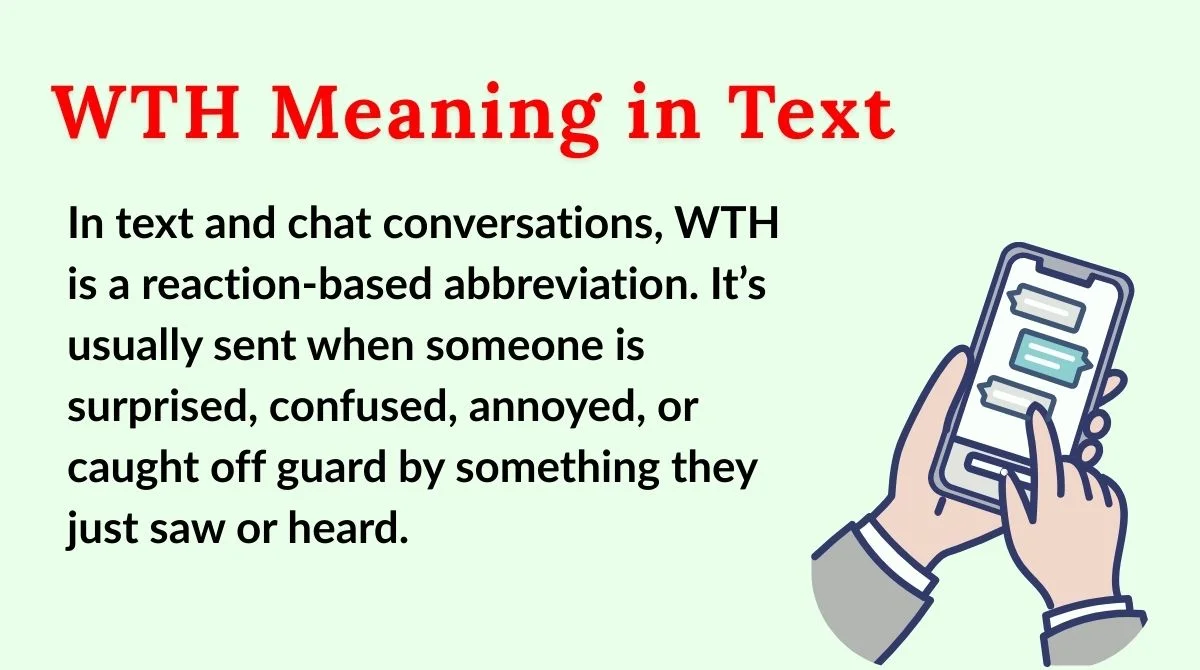
In text and chat conversations, WTH is a reaction-based abbreviation. It’s usually sent when someone is surprised, confused, annoyed, or caught off guard by something they just saw or heard.
The meaning isn’t fixed—it shifts with tone, timing, and relationship between the people chatting.
At its core, WTH is an emotional response. It’s often typed quickly, without punctuation, because the sender wants to react in the moment. Think of it as a digital version of raising your eyebrows or blurting out a short phrase when something doesn’t make sense.
Common emotional tones behind WTH include:
- Shock: Something unexpected just happened
- Confusion: The message doesn’t add up
- Annoyance: Mild frustration or disbelief
- Humor: Playful exaggeration among friends
In casual chats, WTH is usually harmless. Friends use it jokingly when someone says something wild or posts a surprising photo. In more serious conversations, though, it can sound sharp or dismissive.
What matters most is context. A “WTH 😂” feels very different from a dry “WTH.” The emoji, timing, and previous messages help you decode the real intent. That’s why understanding how people actually use WTH is more useful than memorizing a single definition.
Full Form, Stands For & Short Meaning of WTH
The most common and widely accepted full form of WTH is:
“What The Hell”
This phrase has been shortened over time to make it faster and more casual for digital communication. In short form, WTH removes the emotional weight of the full phrase while keeping the reaction intact.
Short meanings of WTH include:
- “What is going on?”
- “That makes no sense”
- “I’m surprised”
- “I’m mildly annoyed”
In many chats, WTH works as a softened version of stronger expressions. People use it because it feels less aggressive than spelling everything out, especially in public comments or group chats.
Important nuance:
- WTH can be neutral or playful
- It can also feel rude if sent without context
- Tone depends heavily on who sends it and why
Some users prefer WTH because it avoids explicit language while still expressing emotion. Others use it automatically, without much thought, as part of everyday texting habits.
If you’re reading WTH in a message, don’t take it literally. It’s rarely about the words themselves—it’s about the reaction behind them.
Origin, History & First Known Use of WTH
The phrase behind WTH—“what the hell”—has been around for centuries. It originally appeared in spoken English as a way to express confusion or disbelief without using profanity. Over time, it became a common conversational reaction.
The abbreviation WTH emerged much later, alongside early internet culture. As chat rooms, SMS texting, and online forums grew in the late 1990s and early 2000s, people began shortening common phrases to save time and character space.
Key stages in WTH’s evolution:
- Pre-internet: “What the hell” used in speech
- Early internet: Shortened in forums and IRC chats
- SMS era: Became popular due to character limits
- Social media age: Normalized across platforms
Unlike some slang terms that fade quickly, WTH stuck around because it’s flexible and easy to understand.
It doesn’t rely on trends or specific communities. Anyone with basic English knowledge can usually guess the meaning from context.
Today, WTH feels less edgy than it once did. It’s often seen as a mild, everyday reaction rather than strong language. That shift explains why it’s still widely used across generations.
How People Use WTH in Daily Conversations
In everyday conversations, WTH is mostly used as a quick emotional reaction. People rarely plan to type it—it just slips out when something feels unexpected or confusing.
You’ll often see WTH used:
- As a standalone message
- At the start of a sentence
- Paired with emojis or follow-up questions
Examples of daily usage:
- “WTH just happened?”
- “WTH is this update?”
- “WTH 😂 I wasn’t expecting that”
Among friends, WTH is often playful. In family chats, it’s usually mild confusion. In work-related messages, though, it can feel unprofessional or too blunt.
Tone matters more than words here. Adding humor softens it. Removing context sharpens it.
Typical patterns:
- WTH?? → Strong confusion
- WTH lol → Light joke
- WTH… → Disappointment or disbelief
Because it’s so short, WTH relies on shared understanding. That’s why it works best between people who already know each other’s communication style.
WTH Meaning Across WhatsApp, Instagram, TikTok & Snapchat
Although WTH means the same thing everywhere, its vibe changes by platform.
On WhatsApp, WTH is usually personal. It appears in one-to-one chats or family groups. The tone depends heavily on emojis and follow-ups.
Example:
- “WTH 😅 did you send the wrong file?”
On Instagram, WTH often shows up in comments or replies to stories. It’s more reactive and public.
Example:
- “WTH this plot twist 😳”
TikTok
On TikTok, WTH is common in comment sections. It often reacts to surprising or chaotic content.
Example:
- “WTH did I just watch 😂”
Snapchat
On Snapchat, WTH is quick and casual. It’s often sent with snaps or short texts.
Example:
- “WTH you disappeared 👀”
Each platform adds its own tone, but the emotional core stays the same.
Different Meanings of WTH in Other Fields
Outside casual texting, WTH can have different meanings depending on the field. This is where confusion sometimes happens.
Possible alternate meanings:
- Gaming: Reaction to unexpected gameplay
- Tech forums: Confusion about errors or bugs
- Academic or niche contexts: Rare acronyms (very uncommon)
However, in 90% of online usage, WTH still means “What The Hell.” Other meanings are rare and usually explained clearly within context.
If you see WTH in a professional document, it’s likely not slang—but that’s uncommon.
Common Confusions, Mistakes & Wrong Interpretations
People often misunderstand WTH because they read too much into it.
Common mistakes include:
- Assuming anger when it’s just surprise
- Taking it personally without context
- Confusing it with stronger expressions
WTH is usually milder than it sounds. Many users type it without negative intent.
To avoid misreading it:
- Look for emojis
- Check the previous message
- Consider your relationship with the sender
Context beats assumptions every time.
Similar Terms, Alternatives & Related Slang
If you’re learning text slang, WTH sits among many similar expressions.
Related terms:
- WTF – stronger, more intense
- OMG – shock or excitement
- IDK – confusion, uncertainty
- SMH – disappointment
Each alternative carries a slightly different emotional weight.
Examples of WTH in Real Chat Situations
Quick, real-life style examples:
- “WTH 😭 I studied the wrong chapter”
- “WTH was that ending??”
- “WTH lol that scared me”
- “WTH are you serious?”
These examples show how flexible the phrase is.
How to Reply When Someone Says WTH
Your reply should match the tone.
If they’re confused:
- “Yeah, it’s weird. Let me explain.”
If they’re joking:
- “😂 I know, right?”
If they’re annoyed:
- “Sorry, that’s on me.”
Mirroring tone keeps the conversation smooth.
Is WTH Still Popular? Trends & Online Usage
Yes—WTH is still widely used. It hasn’t faded because it’s short, flexible, and emotionally clear. While newer slang comes and goes, WTH remains stable across age groups.
It may not trend, but it endures.
FAQs About WTH Meaning in Text
1. Is WTH rude?
Not usually. Context decides.
2. Is WTH stronger than OMG?
Yes, slightly more intense.
3. Can I use WTH at work?
Better to avoid it in professional chats.
4. Does WTH always mean “What The Hell”?
Almost always, yes.
5. Is WTH outdated slang?
No, it’s still common and understood.
Conclusion
Understanding the WTH meaning in text is all about context, tone, and timing. While the abbreviation stands for “What The Hell,” its real message depends on how and where it’s used.
Sometimes it signals shock. Sometimes it’s playful confusion. Other times, it shows mild frustration.
Across platforms like WhatsApp, Instagram, TikTok, and Snapchat, WTH remains a quick way to react without typing a full sentence. It’s not going anywhere anytime soon.
As long as people keep texting fast and reacting emotionally, WTH will stay part of everyday digital language. Now that you know how to read it—and reply to it—you can handle it confidently without overthinking.

✨ “Elara Winslow weaves words with wit, turning everyday thoughts into moments of joy.”