If you spend time chatting online, gaming, or scrolling social media, you’ve probably seen someone type AFK and disappear for a bit.
That’s why many people search for AFK meaning in text—they want to understand what it means, when to use it, and whether it’s still relevant today.
AFK is one of those short internet terms that looks simple but carries a lot of context depending on where it’s used. From casual chats to intense gaming sessions, it helps people explain their absence without typing a long message.
In this article, we’ll break down the meaning of AFK in a clear, friendly way.
You’ll learn its full form, history, real chat examples, platform-specific uses, and even how to reply when someone says it. Let’s make AFK easy to understand once and for all.
What Does AFK Mean in Text & Chat?
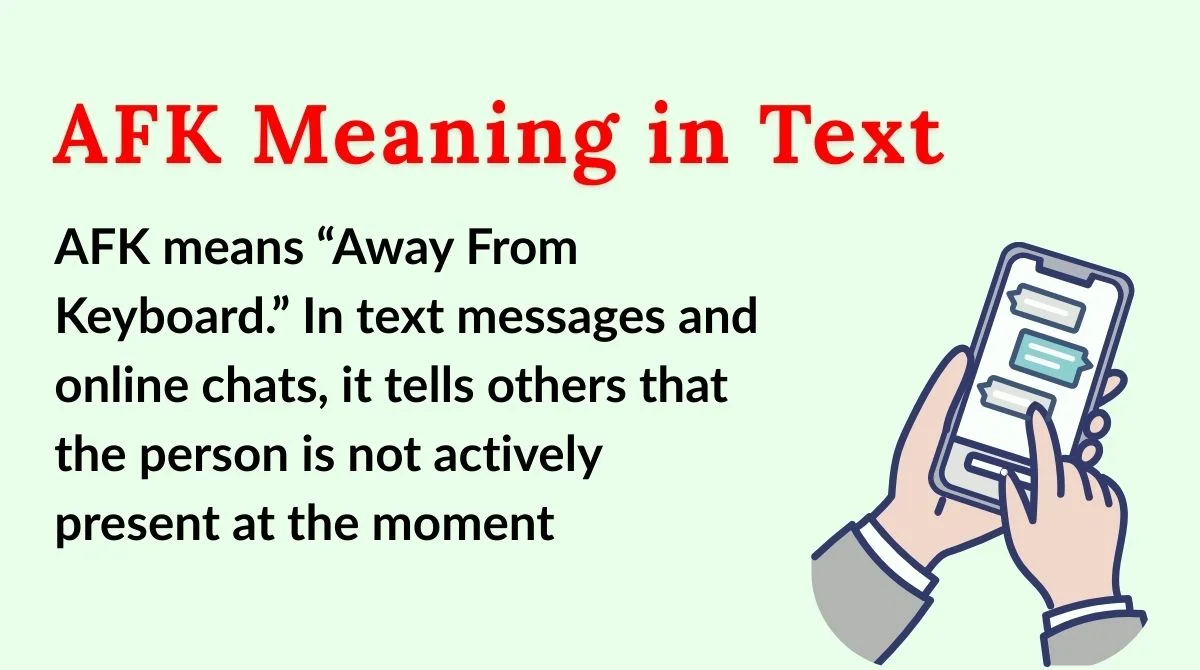
AFK means “Away From Keyboard.” In text messages and online chats, it tells others that the person is not actively present at the moment.
They might be stepping away briefly or leaving for a longer time, but the key idea is that they are unavailable right now.
People use AFK to set expectations. Instead of leaving messages unanswered, they explain their silence in advance. This is especially common in fast-moving conversations like group chats, online games, or work chats.
AFK can describe many situations:
- Stepping away to eat
- Taking a phone call
- Going to the bathroom
- Doing something offline
- Leaving temporarily during a game
In most cases, AFK implies the person plans to return. That’s different from logging off completely. The tone is casual and polite, not formal.
AFK is usually written in uppercase, but lowercase (afk) means the same thing. It’s often used alone or followed by a short reason.
Common ways AFK appears in chats:
- As a quick status update
- As a heads-up before disappearing
- As a response when someone asks where you are
Because it’s short and widely understood, AFK saves time and keeps conversations smooth. That’s why it remains popular even after many years of internet use.
Full Form, Stands For & Short Meaning of AFK
The full form of AFK is Away From Keyboard. It literally means the person is not at their computer or device at that moment.
Originally, AFK referred to physical keyboards, mainly on desktop computers. Over time, the meaning expanded. Today, it applies even when people are using phones or tablets. The phrase stayed the same, but the idea evolved.
Here’s how AFK is commonly understood:
- Full form: Away From Keyboard
- Short meaning: Temporarily unavailable
- Context: Online chats, games, messages
AFK doesn’t usually mean the person has left forever. It suggests a pause, not an ending. That’s why it feels friendly and non-dramatic.
AFK can be used:
- Before leaving: “AFK for 10 mins”
- During absence: “Sorry, was AFK”
- As a status: “AFK rn”
In casual conversation, people rarely think about the literal keyboard part anymore. AFK has become a general internet term for stepping away from any digital interaction.
This simple abbreviation works because it’s fast, clear, and widely recognized across age groups and platforms.
Origin, History & First Known Use of AFK
AFK originated in the early days of the internet, especially during the 1990s. It became popular in online chat rooms, IRC (Internet Relay Chat), and early multiplayer games.
Back then, most users communicated through desktop computers. If someone stopped responding, others had no way of knowing why. AFK solved that problem by giving a quick explanation.
Gamers were among the first to adopt AFK widely. In multiplayer games, teamwork mattered. Saying AFK warned teammates that someone might not respond or play for a moment.
Over time, AFK spread beyond gaming:
- Chat rooms
- Forums
- Messaging apps
- Social media platforms
As mobile devices became common, AFK didn’t disappear. Instead, it adapted. Even without a physical keyboard, people still understood what it meant.
AFK survived because:
- It’s short and efficient
- It works in many situations
- It became part of internet culture
Today, AFK is considered classic internet slang. It’s one of the few early abbreviations that never really went out of style.
How People Use AFK in Daily Conversations
In everyday conversations, AFK is used to keep communication polite and clear. Instead of leaving others guessing, it explains a pause.
People use AFK in:
- Group chats
- Work messages
- Gaming chats
- Friends’ DMs
AFK often comes with context. People add a reason or time estimate to be helpful.
Common daily uses:
- “AFK, grabbing food 🍔”
- “AFK for a call”
- “Was AFK, sorry!”
It’s also used reactively. If someone messages and doesn’t get a reply, AFK explains the delay later.
AFK keeps conversations friendly. It shows respect for others’ time without over-explaining.
In professional settings, AFK may feel too casual. People might choose alternatives like “brb” or “away.” But in informal spaces, AFK fits perfectly.
AFK Meaning Across WhatsApp, Instagram, TikTok & Snapchat
AFK means the same thing across platforms, but how it’s used can vary.
- Used in group chats or work groups
- Often paired with a reason
Example: “AFK for 15 mins”
- Used in DMs
- Casual and brief
Example: “AFK rn, talk later”
TikTok
- Seen in comments or live chats
- Often playful or humorous
Example: “AFK, dinner time 😂”
Snapchat
- Used in quick chats
- Usually informal
Example: “AFK, back soon 👋”
No matter the platform, AFK signals temporary absence. Tone depends on emojis and context.
Different Meanings of AFK in Other Fields
While AFK mostly means Away From Keyboard, it can have rare alternate meanings in other fields.
Examples:
- Gaming: Player not actively playing
- IT/Tech: User inactive
- Slang humor: “Away From Knowledge” (joking use)
These alternative meanings are uncommon. In texting and chat, AFK almost always means Away From Keyboard.
Context usually makes the meaning obvious.
Common Confusions, Mistakes & Wrong Interpretations
Some people misunderstand AFK, especially new internet users.
Common mistakes:
- Thinking AFK means offline permanently
- Confusing AFK with BRB
- Assuming AFK is rude
AFK vs BRB:
- AFK: Away, duration unknown
- BRB: Coming back very soon
AFK is not rude. It’s actually polite when used correctly.
Similar Terms, Alternatives & Related Slang
AFK has many related terms:
- BRB – Be Right Back
- Away – Simple status
- Offline – Not connected
- Busy – Not available
Examples of AFK in Real Chat Situations
Quick chat examples:
- “AFK for lunch 🍕”
- “Going AFK, back soon”
- “Sorry! Was AFK 😅”
- “AFK during the meeting”
These short lines make conversations smoother.
How to Reply When Someone Says AFK
Simple replies work best:
- “Okay 👍”
- “No worries”
- “See you soon!”
- “Got it 😊”
You don’t need long responses. Keep it friendly and relaxed.
Is AFK Still Popular? Trends & Online Usage
Yes, AFK is still widely used. It remains popular in:
- Gaming communities
- Group chats
- Online workspaces
Even with new slang, AFK stays relevant because it’s clear and useful. Classic internet terms tend to last—and AFK is one of them.
FAQs About AFK Meaning in Text
1. What does AFK mean in texting?
It means Away From Keyboard, or temporarily unavailable.
2. Is AFK rude to say?
No, it’s polite and helpful.
3. Does AFK mean offline?
Not exactly. AFK usually means you’ll return.
4. Can AFK be used on phones?
Yes, it’s commonly used on mobile chats.
5. Is AFK still used today?
Yes, especially in gaming and group chats.
Conclusion
AFK is a simple but powerful internet abbreviation that helps people communicate clearly when they step away.
Its meaning—Away From Keyboard—has stayed consistent, even as technology and platforms changed.
From early chat rooms to modern apps like WhatsApp and Instagram, AFK continues to save time and avoid confusion.
It’s easy to use, widely understood, and still relevant today. Whether you’re gaming, chatting with friends, or managing group conversations, AFK offers a polite way to explain your absence.
Now that you know its meaning, history, and usage, you can confidently use AFK in your own messages without second-guessing.
Simple, classic, and effective—that’s why AFK isn’t going anywhere anytime soon.

✨ “Elara Winslow weaves words with wit, turning everyday thoughts into moments of joy.”